
Coffee Grinders
Choosing a coffee grinder
Grinding your beans just before you brew is the simplest way to make better coffee. Ground coffee loses much of its aroma within minutes, while whole beans stay fresh for weeks.
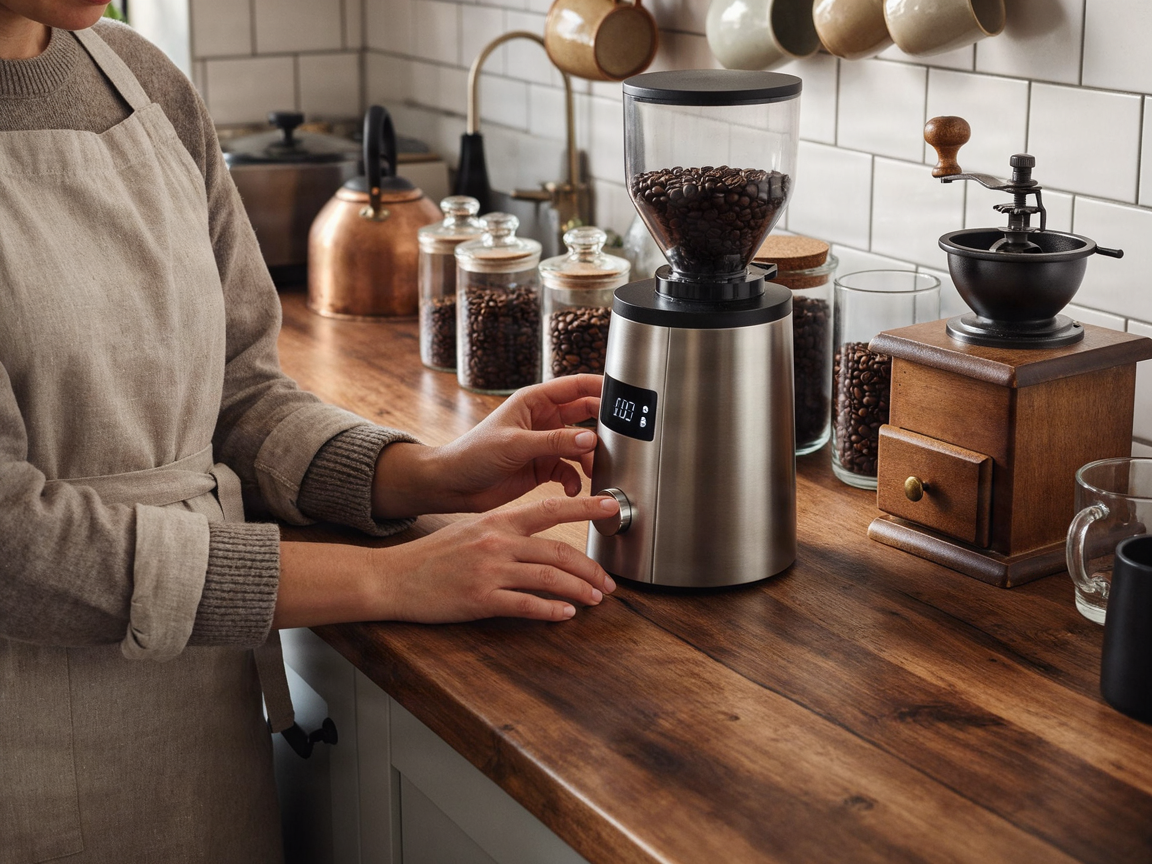
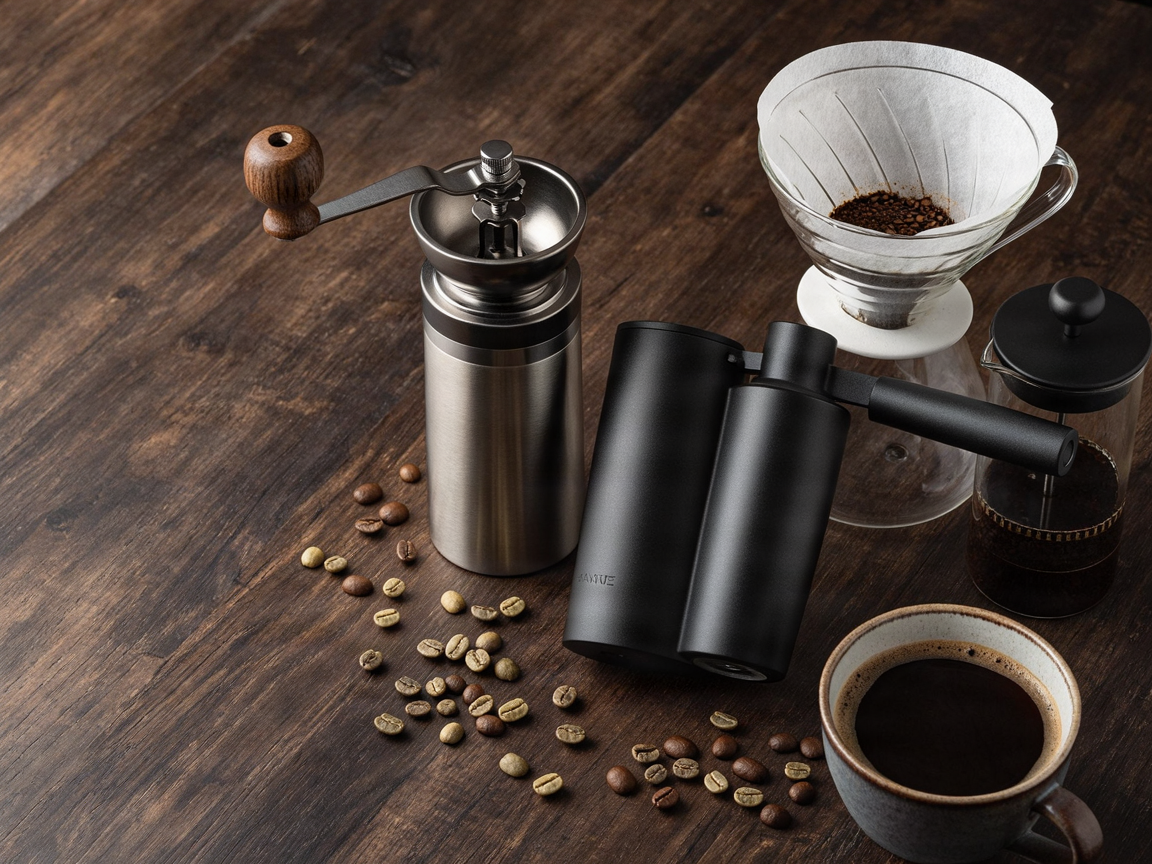
Hand or electric? Hand grinders are quiet, portable and need no plug. Even budget models use burrs, which give a more even grind than cheap electric blade grinders. They’re ideal for one or two cups and for travel. Electric grinders save effort and time, especially if you brew for several people or make espresso every day.
Burrs or blades? Burr grinders crush beans between two grinding surfaces set a fixed distance apart, so every particle comes out a similar size. Blade grinders chop the beans with a spinning blade, giving a mix of dust and chunks. That makes a blade fine for a cafetière on a budget, but not for espresso or pour-over.
Match the grinder to your brewing. Espresso needs a very fine, very consistent grind, so look for an electric burr grinder over £50 or a premium hand grinder. Filter, pour-over, moka pot and cafetière brewing are far more forgiving, and almost any burr grinder will do.
What you get for your money. Under £20 you’ll find ceramic-burr hand grinders and basic blade grinders. Between £20 and £60 there are better hand grinders and entry-level electric burr grinders. Above £60 you’re paying for steel burrs, fine adjustment and grinders built to last for years.
Not sure where to start? Read our guide, How to Choose a Coffee Grinder.