
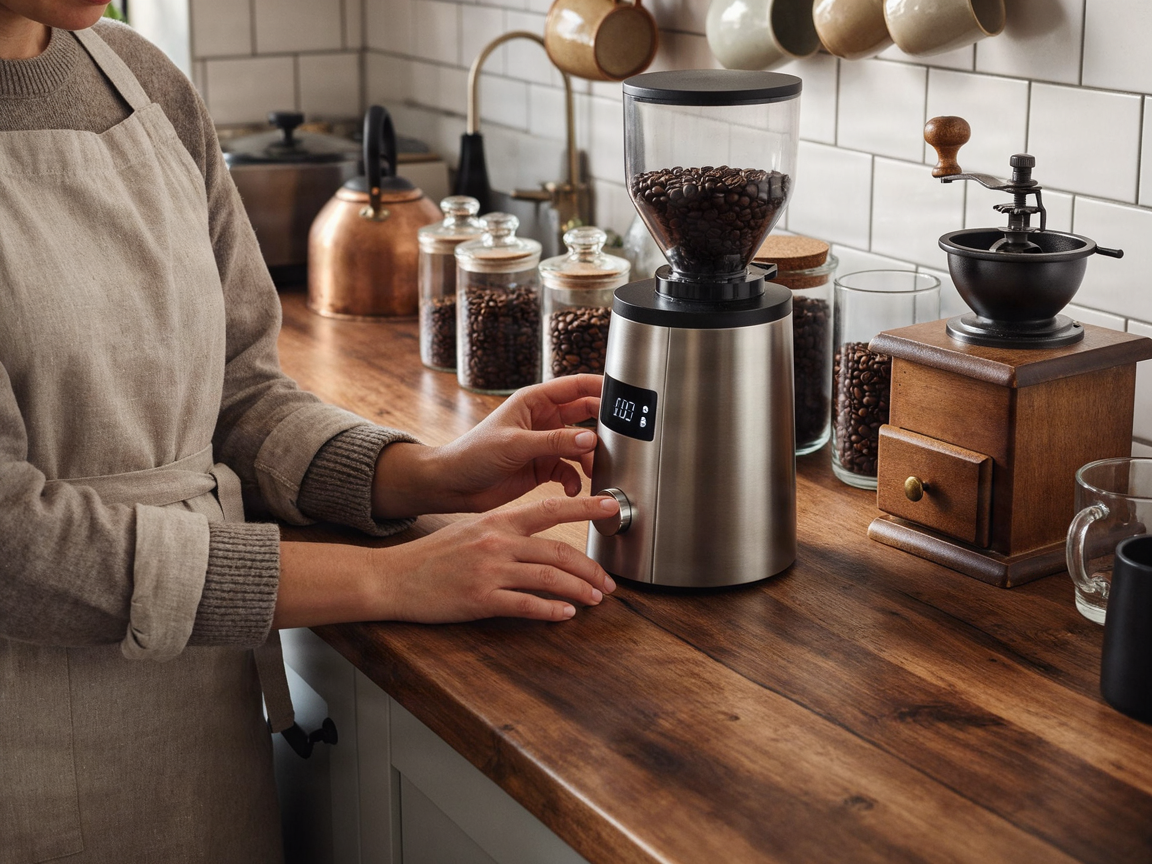
If you want better coffee at home, buy a grinder before you upgrade anything else. Coffee starts to lose its aroma within minutes of being ground, so beans ground just before you brew will taste noticeably fresher than anything from a pre-ground bag. The right grinder also lets you match the grind to your brewing method, which is the key to coffee that tastes balanced rather than bitter or sour.
This guide explains the choices in plain English and points you to our round-ups for each type and budget.
Which grinder suits you?
- “I just want fresher coffee in my cafetière.” A blade grinder (from under £20) or a budget hand grinder will do the job.
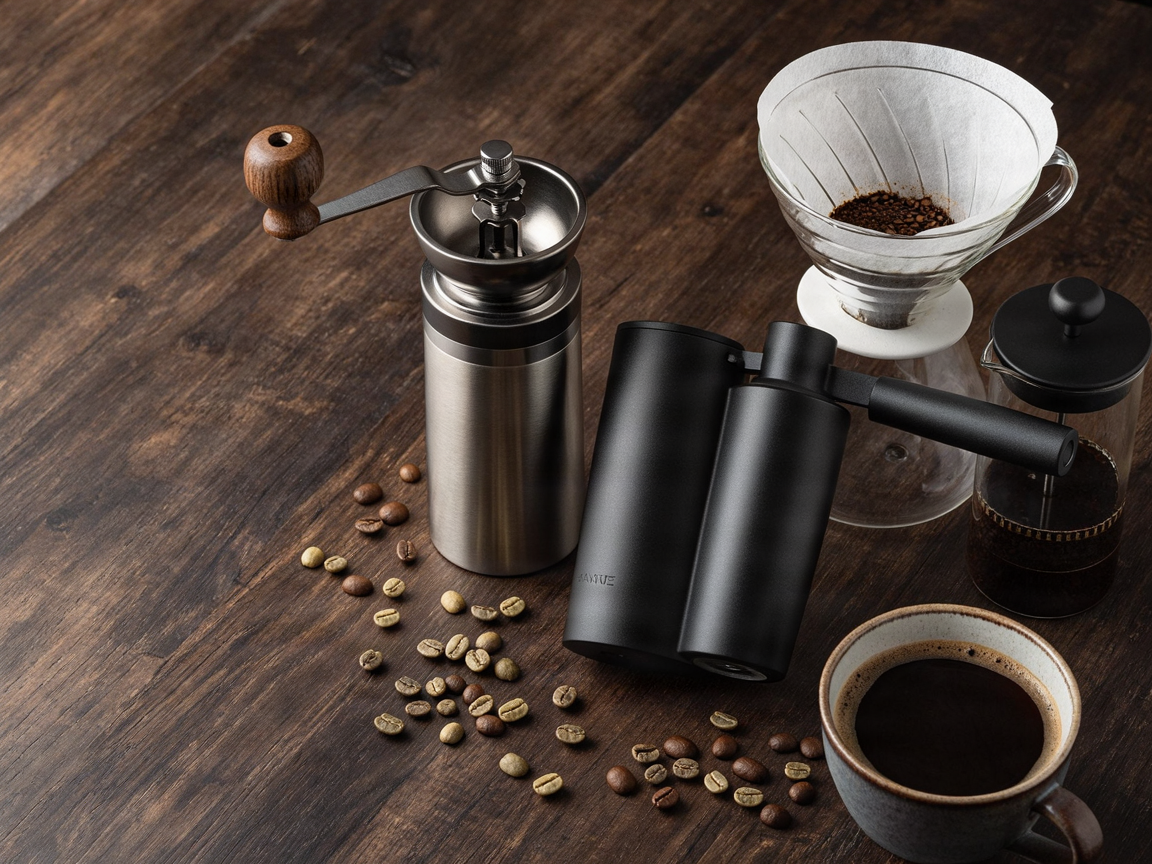
- “I make one or two cups a day and don’t mind a bit of effort.” A hand grinder between £20 and £60 gives you a better grind than electric models costing twice as much.
- “I make coffee for the household every morning.” An electric burr grinder under £50 saves time and gives consistent results for filter, cafetière and moka pot.
- “I’ve got an espresso machine.” Choose an electric burr grinder over £50 or a premium hand grinder over £60. Espresso is the one method where a cheap grinder will hold you back.
- “I travel or camp.” A compact hand grinder or a rechargeable electric burr grinder.
Decision 1: Burrs or blades?
Blade grinders have a spinning metal blade, like a small blender. They’re cheap and compact and will grind spices too, but they chop beans unevenly, leaving a mix of powder and chunks. Small particles over-extract (bitter) while large ones under-extract (sour). You control fineness only by how long you grind.
Burr grinders crush beans between two ridged surfaces set a fixed distance apart, so particles come out a similar size. You choose the size with a dial, from coarse to fine. The result is a more balanced cup and a grind you can repeat every day.
Our view: blade grinders are fine for a cafetière on a tight budget. For any other method, choose burrs.
Decision 2: Hand or electric?
Hand grinders are quiet, portable and need no plug. Because even cheap ones use burrs, a £30 hand grinder will often outperform a £30 electric grinder. The trade-off is effort: grinding enough for one cup takes about 30 seconds to a minute, longer for espresso.
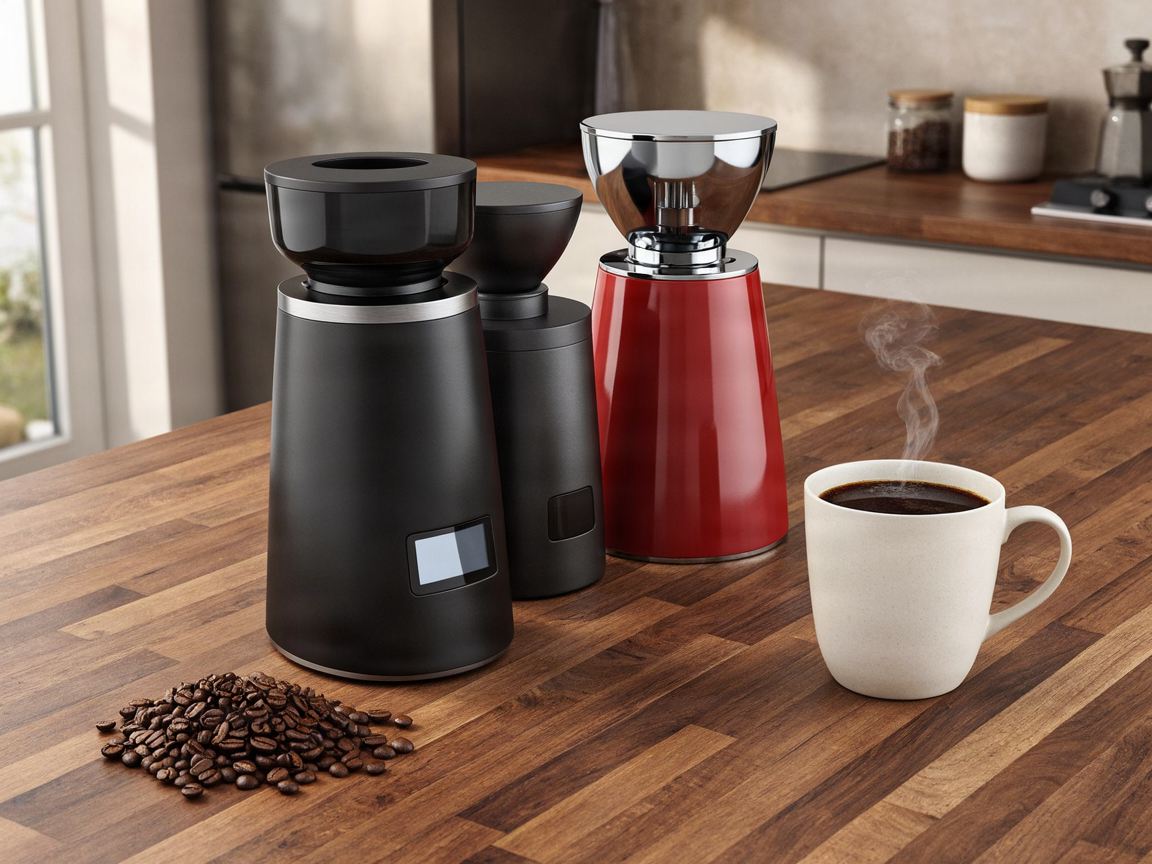
Electric grinders are quicker and effortless, and better if you make several cups at once. Good electric burr grinders cost more than hand grinders of similar quality, because you’re also paying for the motor.
Decision 3: Conical or flat burrs? Ceramic or steel?
Most home grinders use conical burrs, which are quiet, efficient and forgiving. Flat burrs are common in pricier grinders, and some coffee lovers prefer the flavour clarity they give, but either type makes excellent coffee.
Ceramic burrs are found in many budget hand grinders. They stay sharp for a long time but can chip if a stone slips in with your beans. Stainless steel burrs cut more precisely and are used in most mid-range and premium grinders.
Decision 4: How many grind settings do you need?
More settings aren’t always better. What matters is whether the grinder can reach the size your method needs, and whether the steps between settings are small enough. For filter and cafetière, a dozen or so settings is plenty. For espresso you need fine steps (stepless or micro-adjustments), because tiny changes affect the shot.
Grind size by brewing method
| Brewing method | Grind size | Looks like | Grinder needed |
|---|---|---|---|
| Turkish coffee | Extra fine | Flour | Specialist hand grinder |
| Espresso | Fine | Fine sand | Electric burr over £50 or premium hand grinder |
| Moka pot / electric moka | Fine to medium-fine | Table salt | Any burr grinder |
| Pour-over (V60, Chemex) | Medium-fine to medium | Coarse sand | Any burr grinder |
| Filter machine | Medium | Coarse sand | Any burr grinder |
| Percolator | Medium-coarse | Rough sand | Any burr grinder |
| Cafetière | Coarse | Sea salt | Burr or blade grinder |
| Cold brew | Extra coarse | Peppercorns | Burr grinder |
Comparing the types at a glance
| Type | Grind consistency | Good for espresso | Effort | Portable | Our round-up |
|---|---|---|---|---|---|
| Electric blade | Low | No | None | No | Read |
| Hand, under £20 | Fair | Rarely | High | Yes | Read |
| Hand, £20–£60 | Good | Some models | Medium | Yes | Read |
| Hand, £60+ | Excellent | Yes | Low to medium | Yes | Read |
| Electric burr, budget | Good | Rarely | None | Some cordless models | Read |
| Electric burr, premium | Very good to excellent | Yes | None | Mostly no | Read |
How much should you spend?
- Under £20: a blade grinder, or a ceramic-burr hand grinder. Good enough for cafetière and filter, and a big step up from pre-ground coffee.
- £20–£60: the sweet spot for hand grinders, with names like Hario, KINGrinder and Timemore offering steel burrs and good consistency. Entry-level electric burr grinders such as the De’Longhi KG79 also sit here.
- £60 and above: premium hand grinders such as the Comandante C40 and 1Zpresso J-Ultra, and electric burr grinders such as the Baratza Encore and Sage Smart Grinder Pro. Worth it for espresso, or if coffee is your hobby.
Looking after your grinder
- Brush it out every week or two to remove old grounds and oils, which go stale and taint fresh coffee.
- Deep-clean monthly. Most burrs lift out for cleaning. Never wash electric burrs with water unless the manual says you can.
- Don’t grind flavoured beans or anything other than coffee in a burr grinder; the oils are hard to remove.
- Keep beans fresh. Store them in an airtight container away from light and heat, and grind only what you need.
Frequently asked questions
Is a burr grinder really worth it over a blade grinder?
For most people, yes. A burr grinder gives an even grind, which means a more balanced cup. If you only use a cafetière and are on a tight budget, a blade grinder is a reasonable start.
Can I use a hand grinder for espresso?
Yes, if it’s designed for it. Premium hand grinders over £60 can grind fine and precisely enough for espresso. Many cheaper models struggle.
How long do grinders last?
A good burr grinder can last many years. Steel burrs may need replacing after several years of daily use; ceramic burrs last longer but can chip.
Should I grind the night before?
It’s better to grind just before brewing. Ground coffee goes stale quickly, so even an overnight wait will cost you some flavour.
Can I grind spices in my coffee grinder?
Only in a blade grinder, and ideally a separate one, because spice flavours linger. Never put spices in a burr grinder.
Why does my coffee taste bitter or sour?
Bitter usually means the grind is too fine or the brew too long; sour means too coarse or too short. Adjust the grind one step at a time.
Pairs well with: coffee scales for weighing your beans, and our guide to coffee beans.
Not sure which to pick? Tell us how you brew and roughly what you’d like to spend, and we’ll point you in the right direction. Ask us a question. We’re happy to help.
Brewing tip: water that’s too hot is the most common cause of bitter tea and coffee. See our brewing temperature guide for the right temperature for every hot drink.
You can also read how buying through The Daily Brew works.
You might also like

Leave a Reply