

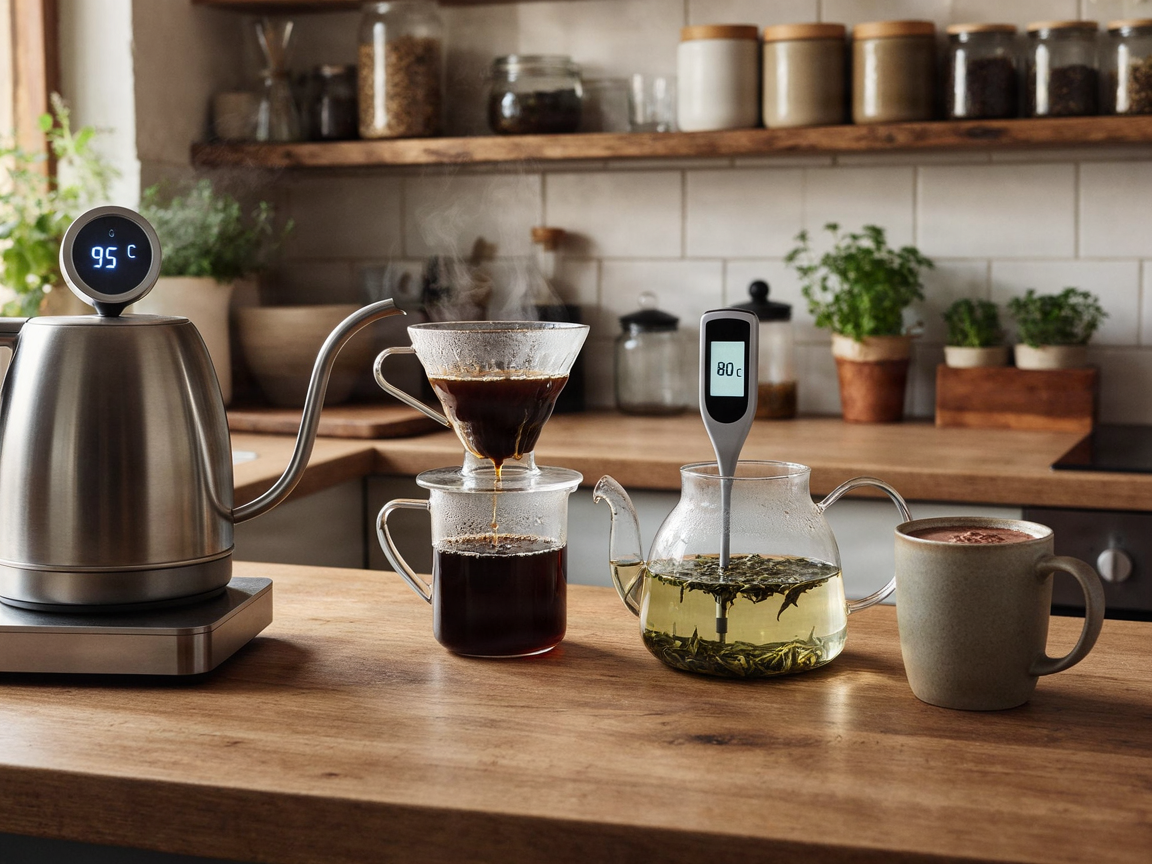
Most of us pour freshly boiled water over everything. For a mug of builder’s tea that’s exactly right, but for green tea, white tea or a good cup of coffee it can be the difference between a sweet, balanced drink and a bitter one. Water that’s too hot pulls out harsh, bitter compounds; water that’s too cool leaves a drink thin and sour.
This guide gives you the ideal temperature and brewing time for every hot drink we cover: coffee, tea, herbal and fruit infusions, and hot chocolate. Treat the numbers as starting points and adjust to taste.
The quick version
- Freshly boiled (95–100°C): black tea, Earl Grey, masala chai, rooibos and all herbal and fruit infusions.
- Just off the boil (90–96°C): almost all coffee: cafetière, filter, pour-over and espresso.
- Cooled (70–85°C): green, white and jasmine tea, matcha, and oolong at the upper end.
- Hot, never boiling (60–70°C): milk for lattes and hot chocolate.
Coffee
Coffee extracts best between about 90°C and 96°C. Boiling water can scorch the grounds and bring out bitterness, so let the kettle settle for around 30 seconds after it clicks off. If your coffee tastes sour, try slightly hotter water or a finer grind; if it’s bitter, go slightly cooler or coarser.
| Method | Water temperature | Brew time | Tip |
|---|---|---|---|
| Cafetière (French press) | 93–96°C | 4 minutes | Coarse grind; pour all the coffee out once pressed |
| Filter / pour-over | 92–96°C | 3–4 minutes | Wet the grounds first and let them “bloom” for 30 seconds |
| Espresso machine | 90–96°C (set by the machine) | 25–30 seconds | Let the machine fully heat up before your first shot |
| Moka pot / electric moka | Start with just-boiled water in the base | Until it gurgles | Medium heat; take it off as soon as it starts to sputter |
| Stovetop percolator | Just below boiling | 7–10 minutes | Keep it at a gentle bubble, not a rolling boil |
| Pod machine | Set by the machine | Automatic | Run a water-only cycle first to warm the system |
| Instant coffee | 80–90°C | Stir and serve | A splash of cold water first stops it tasting harsh |
| Cold brew | Cold or room temperature | 12–24 hours | Extra-coarse grind; keep in the fridge |
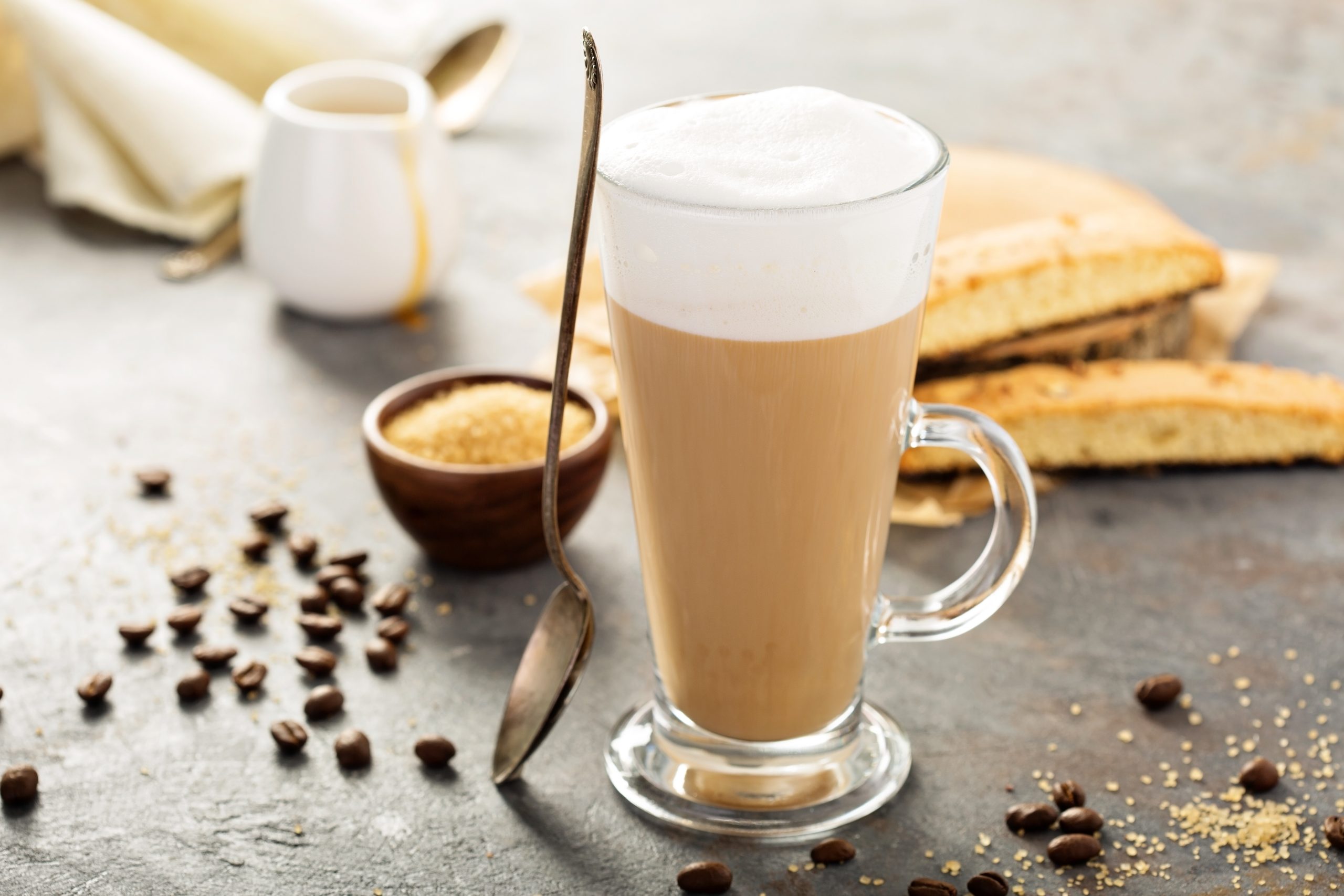
Milk for lattes and cappuccinos: heat to 55–65°C, which is hot to the touch but not scalding. Above about 70°C milk loses its natural sweetness and the foam collapses. A handheld frother works best with milk warmed to this range first.
Tea
All true tea comes from the same plant, Camellia sinensis. The difference is how much the leaves are oxidised. The general rule is: the darker the tea, the hotter the water. Delicate green and white teas scald and turn bitter in boiling water, while black tea needs the heat to release its full flavour.
| Tea | Water temperature | Steeping time | Tip |
|---|---|---|---|
| Black tea (English breakfast, Assam) | 95–100°C | 3–5 minutes | Freshly boiled water; add milk after brewing |
| Earl Grey | 95–100°C | 3–4 minutes | Longer than 5 minutes can make the bergamot taste bitter |
| Masala chai | 100°C | 4–5 minutes | For a proper chai, simmer the tea and spices in milk and water for 5 minutes |
| Oolong | 85–95°C | 3–5 minutes | Good oolong can be re-steeped several times |
| Jasmine tea | 75–80°C | 2–3 minutes | Most jasmine uses a green tea base, so treat it like green tea |
| Green tea | 70–80°C | 2–3 minutes | Boiling water is the most common cause of bitter green tea |
| White tea | 70–80°C | 3–5 minutes | Delicate and sweet; give it a little longer than green |
| Matcha | 70–80°C | Whisk for 30 seconds | Whisk in a “W” motion until frothy; never use boiling water |
Herbal and fruit infusions
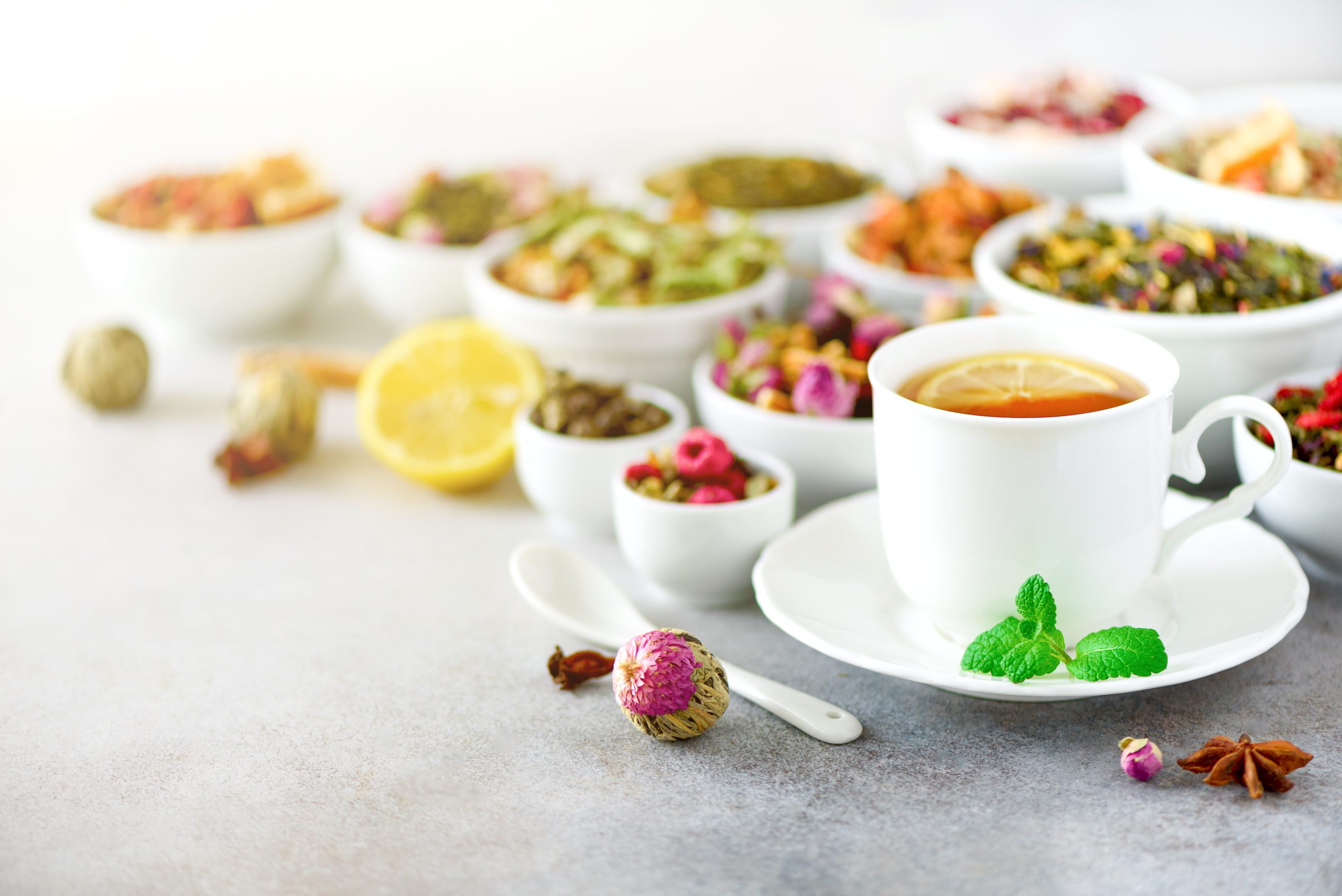
Herbal and fruit infusions aren’t made from the tea plant, so they don’t turn bitter the same way, and they need freshly boiled water. The heat draws out flavour from tough flowers, roots and dried fruit. It also matters for food safety: dried herbs and fruit are raw agricultural products, and makers advise using boiling water and steeping for the full time on the pack. Cover your cup or pot while it steeps to keep the aromatic oils in.
| Infusion | Water temperature | Steeping time | Tip |
|---|---|---|---|
| Peppermint | 100°C | 5–7 minutes | Cover it to keep the menthol in; lovely iced too |
| Chamomile | 95–100°C | 5 minutes | Whole flowers give a sweeter cup than broken pieces |
| Lavender | 95–100°C | 4–5 minutes | Go easy; too long or too much can taste soapy |
| Lemon balm | 95–100°C | 5–10 minutes | Gentle flavour; longer steeping makes it stronger, not bitter |
| Ginger | 100°C | 5–10 minutes | The longer it steeps, the more heat it has; simmer fresh root for 10–15 minutes |
| Hibiscus | 100°C | 5–7 minutes | Very tart; brew strong and pour over ice in summer |
| Rooibos | 100°C | 5–7 minutes | Won’t turn bitter, so you can leave the bag in |
| Fruit infusions | 100°C | 5–8 minutes | Always use freshly boiled water and steep for the full time |
Not sure which herbal tea to try? Our Guide to Aromatic Teas explains what each one tastes like.
Hot chocolate
The secret to great hot chocolate is not boiling the milk. Heat it gently to 60–70°C, until it’s steaming and small bubbles appear at the edge, then take it off the heat.
| Type | Temperature | Method |
|---|---|---|
| Cocoa or hot chocolate powder | Milk at 60–70°C | Mix the powder into a paste with a splash of warm milk first, then whisk in the rest to avoid lumps |
| Chocolate flakes or real chocolate | Milk at 60–70°C | Stir the chocolate into the hot milk off the heat until melted; never boil, or it can turn grainy |
| Made with water | 80–90°C | Water just off the boil dissolves the powder well; top with a little frothed milk |
| Hot chocolate maker | Set by the machine | Most heat and whisk to around 65°C automatically |
How to get the temperature right without a thermometer
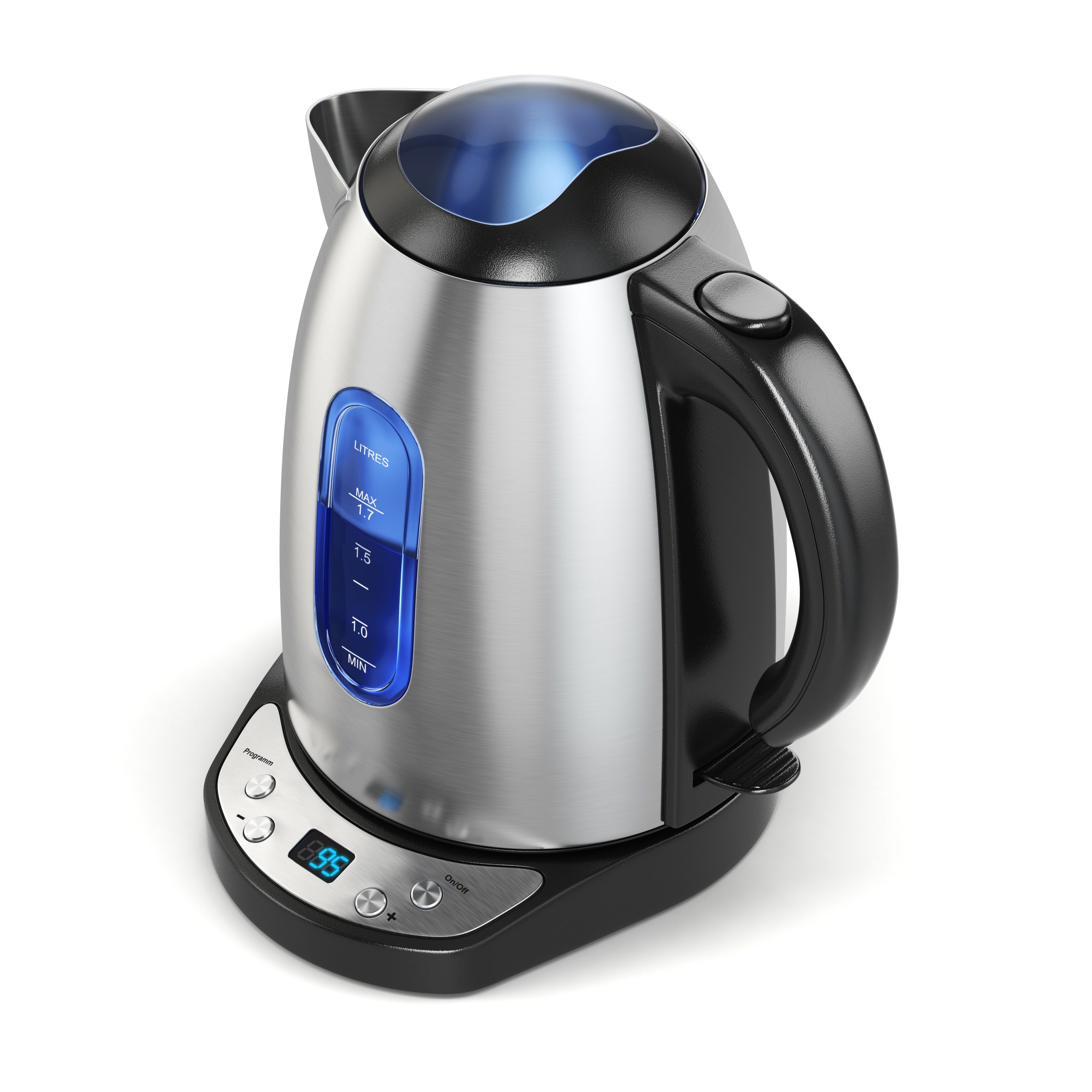
A temperature-controlled kettle is the easiest option if you drink a lot of green tea or coffee: you set the temperature and it stops heating there, with no guesswork. See our pick of the best temperature-controlled kettles. Without one, these rough guides work well for a typical kettle of water:
- About 95°C: wait 30 seconds to a minute after the kettle boils. This is right for most coffee.
- About 80°C: mix roughly one part cold water to four parts boiling, or leave the kettle lid open for 3–5 minutes. This is right for green, white and jasmine tea.
- Milk at 60–70°C: it should be too hot to keep your finger in, steaming, with tiny bubbles at the edge but no rolling boil.
How fast water cools depends on how much is in the kettle and the room temperature, so treat these as starting points.
Frequently asked questions
Why does my green tea taste bitter?
Almost always because the water was too hot or it steeped too long. Try 75–80°C for no more than three minutes.
Should I use boiling water for coffee?
Not quite. Water just off the boil, around 93–96°C, gives a sweeter, less bitter cup. Letting the kettle rest for 30 seconds is enough.
Can I use cooler water for herbal tea?
It’s best not to. Herbal and fruit infusions need freshly boiled water to bring out their flavour and for food safety. If you’d like a cold drink, brew it hot, then cool it and pour over ice.
Does re-boiling water spoil tea?
Freshly drawn water tastes brighter because it holds more oxygen. For the best cup, empty the kettle and refill it with fresh water rather than re-boiling what’s left.
Should milk go in before or after the tea?
If you’re brewing in the mug, add milk after: cold milk drops the water temperature and stops the tea brewing properly. In a teapot it matters much less, so it’s down to personal taste.
Read next: How to Choose a Coffee Grinder, How to Choose a Coffee Machine and our Guide to Coffee Beans.
Not sure which to pick? Tell us how you brew and roughly what you’d like to spend, and we’ll point you in the right direction. Ask us a question. We’re happy to help.
Brewing tip: water that’s too hot is the most common cause of bitter tea and coffee. See our brewing temperature guide for the right temperature for every hot drink.
You can also read how buying through The Daily Brew works.
You might also like
Leave a Reply