

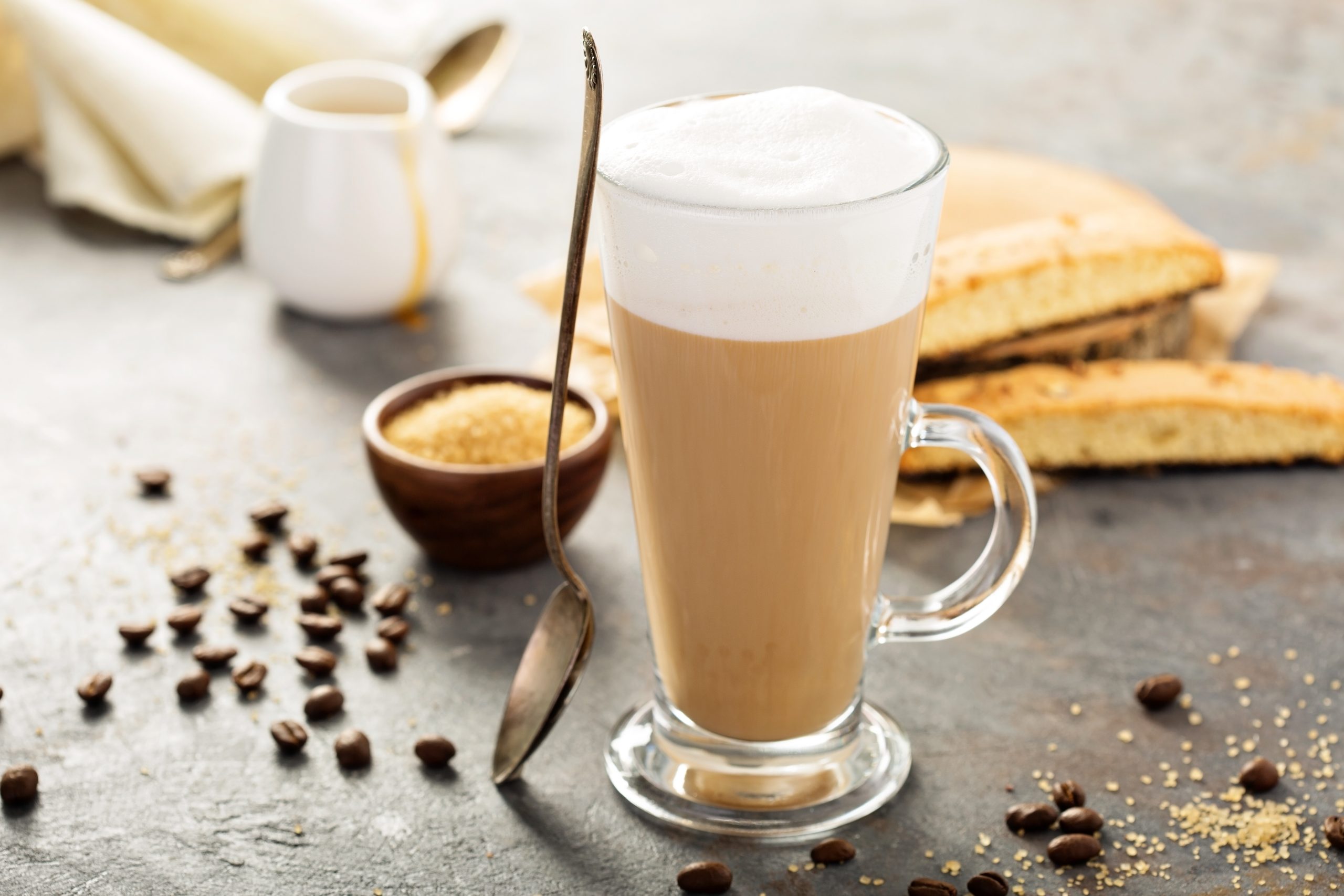
A latte is one of the simplest coffees there is: a shot or two of espresso topped up with plenty of steamed milk and a thin layer of foam. But a really good one, smooth, sweet and silky rather than scalded and bubbly, comes down to a few details: fresh coffee, the right ratio, and milk heated to the right temperature. Here’s how to get them right at home, whether or not you own an espresso machine.
What is a latte?
“Caffè latte” simply means “milk coffee” in Italian. It’s mostly milk, so it’s milder and creamier than a cappuccino or flat white. Here’s how they compare:
| Drink | Espresso | Milk | Foam |
|---|---|---|---|
| Latte | 1–2 shots | Lots (200–250ml) | Thin layer, about 1cm |
| Flat white | 2 shots | Less (120–150ml) | Very thin, velvety |
| Cappuccino | 1–2 shots | Less (100–150ml) | Thick, airy, 2cm or more |
What you’ll need
- Strong coffee: ideally espresso from an espresso machine, but a moka pot or pod machine works too (see below).
- Freshly ground beans: a medium or medium-dark roast suits milk best. A burr grinder gives the most even grind.
- A way to froth milk: a steam wand, an electric milk frother or a handheld frother.
- A milk jug (a small stainless steel pitcher if you’re steaming), and a large mug or latte glass of around 300ml.
Ingredients (1 latte)
- 1 double espresso (about 18g of coffee making 36–40ml), or a single shot for a milder drink
- 200–250ml cold milk: whole milk for the creamiest result, or a barista-style oat milk
- Optional: a teaspoon of sugar or a flavoured syrup
How to make a latte with an espresso machine
- Warm your mug. Fill it with hot water while you prepare everything, then tip it out. A cold mug cools the latte quickly.
- Pull the espresso. Grind fresh, level and tamp the coffee firmly, then brew a double shot straight into the warm mug. It should take about 25–30 seconds and have a golden crema on top.
- Purge the steam wand. Open it for a second over the drip tray to clear out any water.
- Stretch the milk. Fill the jug about a third full with cold milk. Put the wand tip just below the surface and turn the steam on fully. You should hear a gentle “tss-tss” sound as air goes in. Do this for only 3–5 seconds: a latte needs just a little foam.
- Swirl and heat. Lower the wand slightly and angle the jug so the milk spins in a whirlpool. This breaks big bubbles into fine, glossy microfoam. Stop when the jug is too hot to hold comfortably, around 60–65°C.
- Tidy the milk. Wipe and purge the wand straight away. Tap the jug on the worktop to pop any bubbles and swirl it until the milk looks like wet paint.
- Pour. Tilt the mug and pour from a few centimetres high into the centre of the espresso. When the mug is about two-thirds full, bring the jug close to the surface so the foam floats on top. Finish with a thin, smooth layer of foam.
How to make a latte without an espresso machine
You won’t get true espresso, but you can still make a very good latte with strong coffee and frothed milk.
Step 1: make strong coffee
- Moka pot: the closest thing to espresso without a machine. Our guide to making the perfect moka pot coffee shows you how. Use about 50ml per latte.
- Pod machine: use an espresso or “ristretto” pod rather than a lungo. See our pod compatibility guide.
- Cafetière: brew it double strength (about 15g of coarse coffee to 120ml of water) for 4 minutes, and use 60–80ml.
Step 2: heat and froth the milk
- Electric milk frother: the easiest option. Pour in the milk, choose the latte setting and it heats and froths in about two minutes.
- Handheld frother: warm the milk in a pan or the microwave until steaming, not boiling, then froth with the tip just under the surface for 15–20 seconds.
- Cafetière: pour warm milk into a clean cafetière and pump the plunger up and down 15–20 times.
- Jam jar: fill a jar no more than halfway with cold milk, screw the lid on and shake hard for 30 seconds. Take the lid off and microwave for about 30 seconds to warm it and set the foam.
Then pour the hot milk over the coffee, holding back the foam with a spoon, and spoon a thin layer of foam on top.
Which milk works best?
| Milk | Taste and texture |
|---|---|
| Whole milk | The classic choice: naturally sweet, with rich, silky microfoam. |
| Semi-skimmed | Froths easily but tastes lighter and thinner. |
| Skimmed | Makes lots of stiff foam but very little creaminess. Better for cappuccinos. |
| Barista oat milk | The best plant milk for lattes: creamy, steams well and pairs nicely with coffee. |
| Soya or almond | Choose a barista version, as ordinary ones can split in hot coffee. |
Always start with cold milk straight from the fridge. It gives you more time to build foam before it gets too hot.
Common mistakes to avoid
- Overheating the milk. Above about 70°C milk loses its natural sweetness and starts to taste cooked. If the jug is too hot to touch, you’ve gone too far. See our Brewing Temperature Guide.
- Too much foam. A thick cap of foam turns a latte into a cappuccino. Add air for only the first few seconds.
- Big bubbles. These come from the wand being too high in the milk. Keep the tip just under the surface, and tap and swirl the jug before pouring.
- Weak coffee. 250ml of milk drowns a single shot. Use a double, or a smaller mug.
- Stale beans. Coffee is at its best within about a month of roasting. Buy small bags and grind just before brewing. Our guide to coffee beans explains what to look for.
Easy variations
- Vanilla latte: stir a teaspoon of vanilla syrup into the espresso before adding the milk.
- Caramel latte: add caramel syrup to the espresso and drizzle a little caramel sauce over the foam.
- Gingerbread latte: a festive favourite. Add gingerbread syrup, or a pinch each of ginger, cinnamon and nutmeg with a little brown sugar.
- Mocha: stir a spoonful of hot chocolate powder or melted dark chocolate into the espresso.
- Iced latte: fill a tall glass with ice, add 200ml of cold milk and pour a double espresso over the top. Stir before drinking.
- Matcha latte: for a caffeine-lighter, coffee-free option, see how to make a matcha latte.
Frequently asked questions
How much caffeine is in a latte?
It depends on the shots, not the milk. A single shot has roughly 60–75mg of caffeine and a double around 120–150mg, so a homemade double-shot latte has about the same as a strong mug of filter coffee.
Can I make latte art at home?
Yes, but you need glossy microfoam from a steam wand. Pour from high to start, then drop the jug close to the surface and wiggle it gently to make a simple heart. It takes practice, so don’t worry if your first few look like blobs.
Why does my latte taste bitter?
Usually the espresso is over-extracted (ground too fine or run too long), the beans are very dark, or the milk was scorched. Try a slightly coarser grind, a medium roast, and milk heated to no more than 65°C.
Do I need an expensive machine?
No. A moka pot and a cheap milk frother make a very good latte. If you want to upgrade, our guide on how to choose a coffee machine will help you pick the right one.
Curious where your morning latte began? Read The History of Coffee, from an Ethiopian hillside to your morning cup.
You might also like

Leave a Reply