

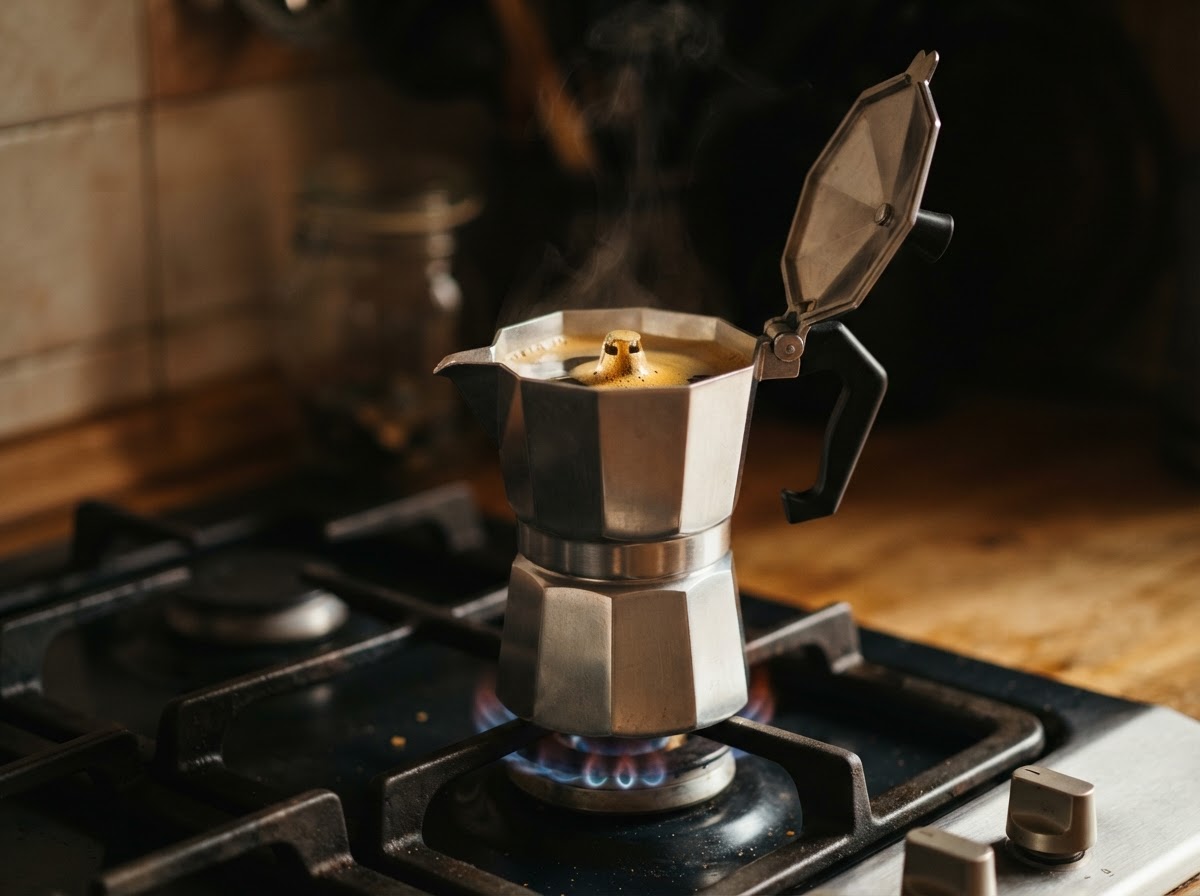
The moka pot has been a fixture of Italian kitchens for nearly a century, and it’s easy to see why. For a modest price it makes rich, strong, espresso-style coffee on the hob, with no pods, no electricity and no fuss. But it has a reputation for bitter, burnt-tasting coffee. That’s almost always down to technique, not the pot.
This guide shows you how to make a smooth, full-flavoured moka coffee every time, and how to fix the most common problems.
The quick version
- Fill the base with hot water up to just below the safety valve.
- Fill the basket with medium-fine ground coffee, level it, and don’t press it down.
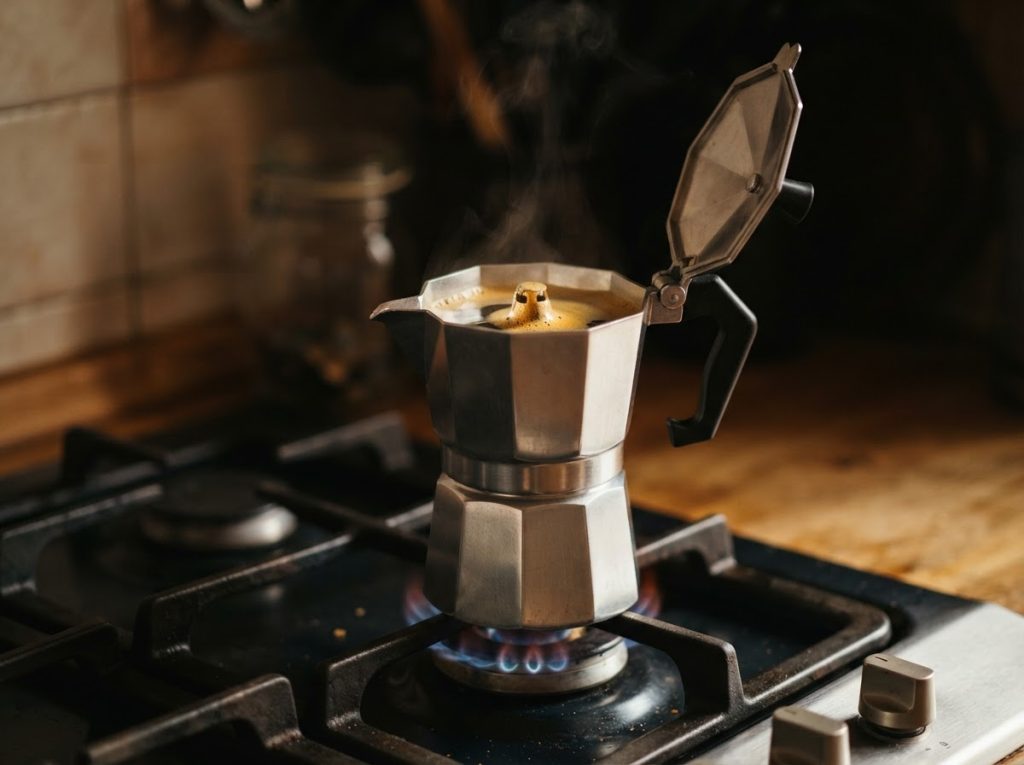
- Screw the pot together firmly and put it on a low to medium heat with the lid open.
- As soon as the coffee turns pale and starts to sputter, take it off the heat and cool the base.
- Stir the coffee in the top chamber, then pour and enjoy.
How a moka pot works
A moka pot has three parts: a base for water, a funnel-shaped basket for the coffee, and a top chamber where the finished coffee collects. As the water in the base heats up, steam pressure pushes it up through the coffee and into the top chamber.
It brews at much lower pressure than an espresso machine, so it isn’t true espresso. But it makes a strong, concentrated coffee that’s closer to espresso than anything from a cafetière or filter.
What you’ll need
- A moka pot. Pot sizes are measured in small espresso-sized “cups” of around 50ml, so a 3-cup pot makes enough for one large mug or two small coffees. Moka pots work best when filled completely, so choose a size you’ll fill every time.
- Freshly ground coffee. A medium or dark roast suits a moka pot well. See our guide to coffee beans for ideas.
- A kettle, to preheat the water.
- A grinder, ideally. Freshly ground beans make a big difference, and a hand grinder or electric burr grinder lets you set exactly the right grind.
Step-by-step method
1. Grind your coffee
Aim for a medium-fine grind: finer than for a filter machine or cafetière, but a little coarser than espresso, about the texture of fine table salt. Too fine and the water struggles to get through, which gives a bitter, over-extracted cup. Too coarse and the coffee comes out thin and sour.
2. Fill the base with hot water
Fill the base with freshly boiled water up to just below the safety valve, the small brass valve on the side. Never fill above the valve. Starting with hot water rather than cold is the single best way to avoid bitterness, because the coffee spends less time sitting on the hot stove before it brews.
The base will be hot, so hold it with a tea towel for the next steps.
3. Fill the basket, and don’t press it down
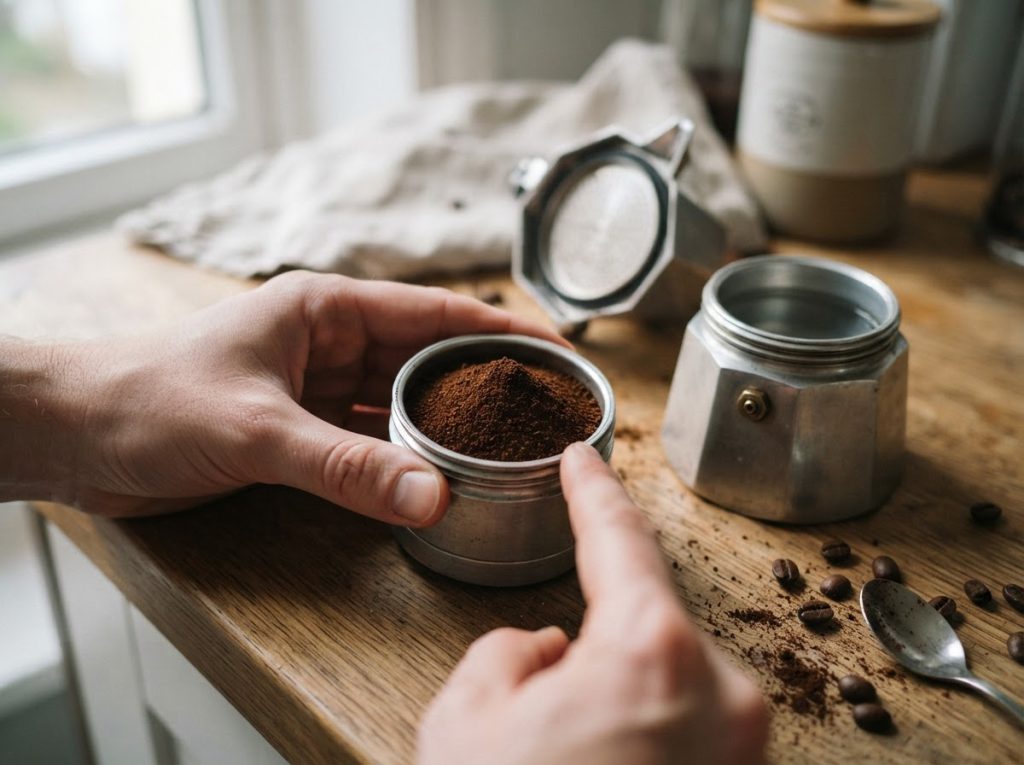
Fill the basket so the coffee forms a small mound, then level it off with your finger. Don’t tamp or press the coffee down as you would for an espresso machine, because a packed basket restricts the flow and can make the pot sputter or leak. Brush any loose grounds off the rim so the pot seals properly.
4. Assemble and heat gently
Put the basket into the base, screw the top on firmly, and place the pot on a low to medium heat. On a gas hob, make sure the flame doesn’t reach up the sides of the pot or touch the handle. Leave the lid open so you can watch what’s happening.
5. Watch for the flow, then take it off the heat
After a minute or two, dark coffee will start to flow into the top chamber. Ideally it should be a slow, steady stream, the colour of dark honey. If it rushes or spits straight away, turn the heat down.
When the stream turns pale and the pot starts to gurgle and sputter, take it off the heat straight away. That last, sputtering part of the brew is where the bitter, burnt flavours come from.
6. Cool the base to stop the brew
To stop the extraction quickly, wrap the base in a cold, damp tea towel, or hold it briefly under cold running water, keeping the top chamber dry. This is the trick that turns a good moka coffee into a great one.
7. Stir and serve

The first coffee to come through is stronger than the last, so give it a quick stir in the top chamber before pouring. Serve it straight, or try one of the ideas below.
Ways to serve moka coffee
- Straight up, in small cups, the way it’s drunk across Italy.
- Long: top it up with hot water for an Americano-style mug.
- Milky: add hot frothed milk for a latte or cappuccino-style drink. A handheld frother or an electric milk frother does the job, heating the milk to 55–65°C.
- Iced: pour over a glass of ice for a strong iced coffee.
Troubleshooting
| Problem | Likely cause | Fix |
|---|---|---|
| Bitter or burnt taste | Heat too high, left on too long, or grind too fine | Start with hot water, use a lower heat, and take it off as soon as it sputters |
| Weak or sour taste | Grind too coarse, or basket not full | Grind a little finer and fill the basket to the top |
| Coffee spits out straight away | Heat too high | Turn the heat down so the coffee flows slowly |
| Little or no coffee comes through | Grind too fine, or coffee pressed down | Use a slightly coarser grind and don’t tamp |
| Leaking around the middle | Grounds on the rim, worn seal, or not screwed tight | Wipe the rim, tighten firmly, and replace the rubber seal if it’s old |
| Metallic taste | A new pot, or a dirty one | Season a new pot (see below) and rinse after every use |
Cleaning and care
- Season a new pot. Brew two or three pots and pour them away before you drink from it.
- Rinse after every use with hot water once the pot has cooled. Most manufacturers advise against washing-up liquid and the dishwasher for aluminium pots, as they can dull the metal and affect the taste. Check your instructions, especially for stainless steel models.
- Dry it fully and store it unscrewed so the seal can breathe.
- Replace the rubber seal and filter plate when they’re worn or hardened. They’re inexpensive and make a big difference to the seal.
- Descale occasionally in hard-water areas, following the manufacturer’s advice.
Moka pot or electric moka machine?
A classic stovetop pot is cheap, simple and lasts for years. Note that traditional aluminium pots don’t work on induction hobs, so you’ll need a stainless steel model or an induction adapter plate.
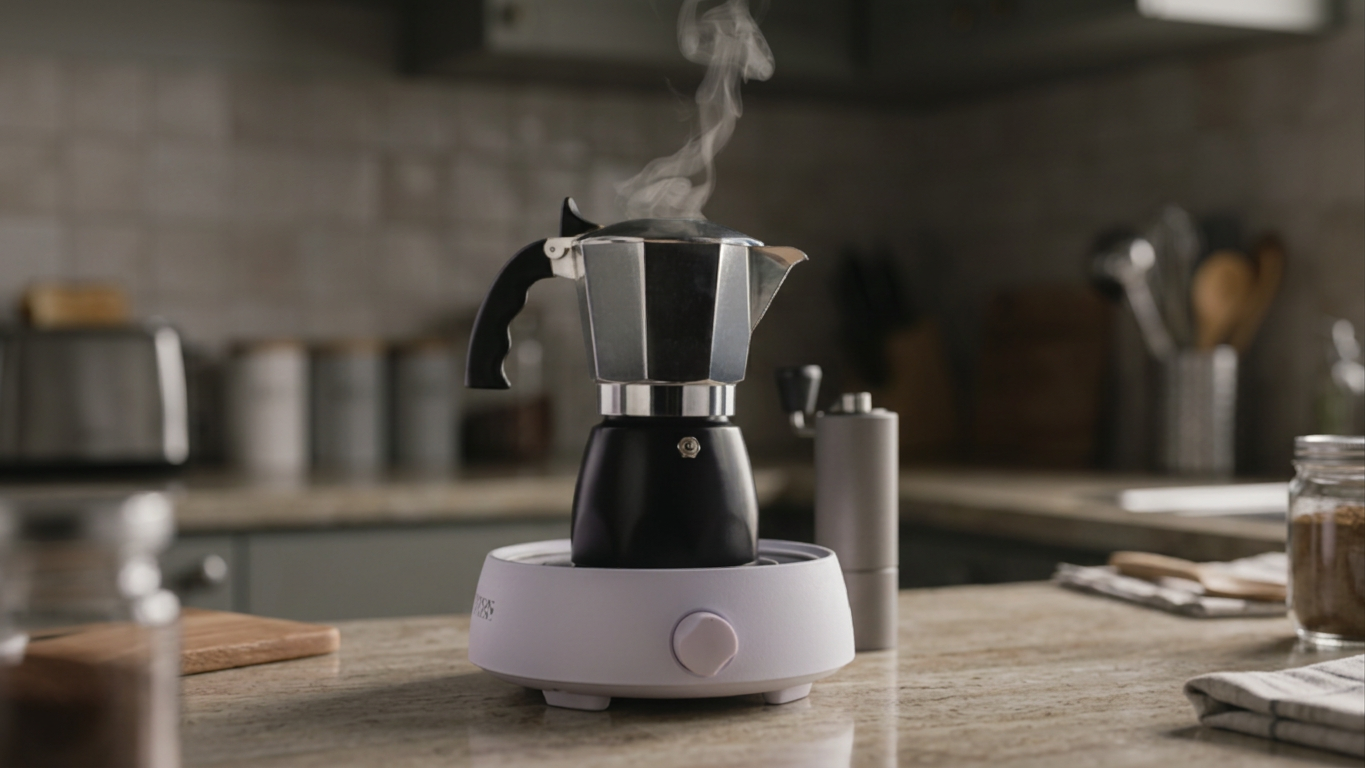
If you’d rather not watch the hob, an electric moka machine heats itself and switches off automatically when the coffee is ready, so it’s very hard to burn. Many also keep the coffee warm. They’re a handy choice for offices, caravans and kitchens without a hob.
Frequently asked questions
Can I use pre-ground coffee?
Yes. Look for coffee labelled for moka pots or stovetop brewing. Coffee ground for espresso machines can be too fine, and filter or cafetière grinds are too coarse.
Can I make half a pot?
Not really. A moka pot is designed to be used full, and a half-filled basket gives weak, uneven coffee. If you often want less, a smaller pot is a better buy. Some brands sell reducer baskets for this.
Why does my moka pot hiss or spit?
A little gurgling at the end is normal: it’s your cue to take it off the heat. Hissing from the safety valve means the pressure is too high, often because the coffee is ground too fine or packed down, or the water is above the valve. Take it off the heat carefully, let it cool, and check those three things.
Is moka coffee stronger than espresso?
It’s strong and concentrated, but usually a little less intense and less syrupy than a true espresso, and with little or no crema. Many people prefer it for its full, rounded flavour.
Read next: our Brewing Temperature Guide, How to Choose a Coffee Grinder, and the best electric moka machines.
Not sure which to pick? Tell us how you brew and roughly what you’d like to spend, and we’ll point you in the right direction. Ask us a question. We’re happy to help.
Brewing tip: water that’s too hot is the most common cause of bitter tea and coffee. See our brewing temperature guide for the right temperature for every hot drink.
You can also read how buying through The Daily Brew works.
You might also like


Leave a Reply