

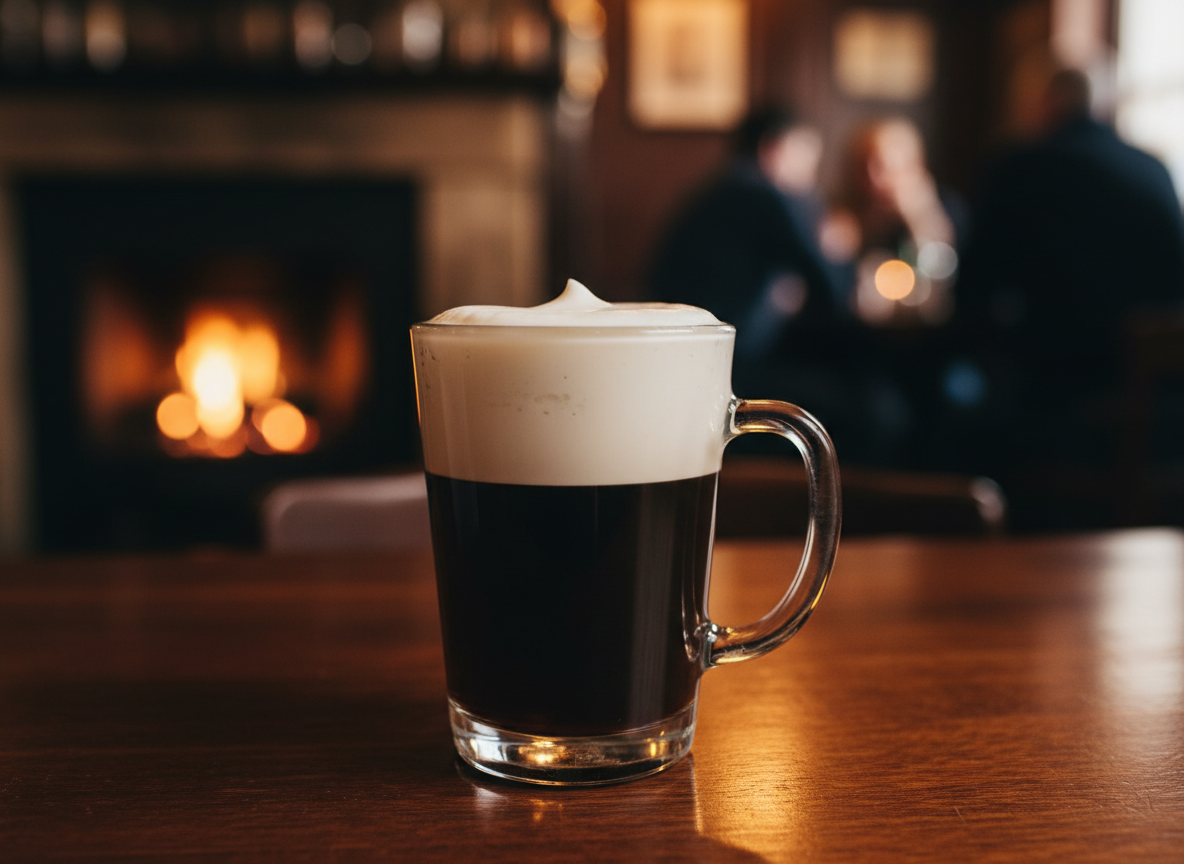
Few drinks are as comforting on a cold evening as a proper Irish coffee: hot, sweet coffee with a measure of Irish whiskey, topped with a thick layer of cool cream that you drink the coffee through. It looks impressive, but it’s surprisingly easy to make at home once you know a couple of tricks.
This guide covers the classic recipe, how to get the cream to float every time, and a few variations, including an alcohol-free version.
The quick version
- Warm a heatproof glass with hot water.
- Stir 1–2 teaspoons of brown sugar into about 120ml of hot, strong coffee until dissolved.
- Add 40ml of Irish whiskey and stir.
- Gently float 30ml of lightly whipped double cream on top over the back of a spoon.
- Don’t stir. Drink the coffee through the cream.
What you’ll need
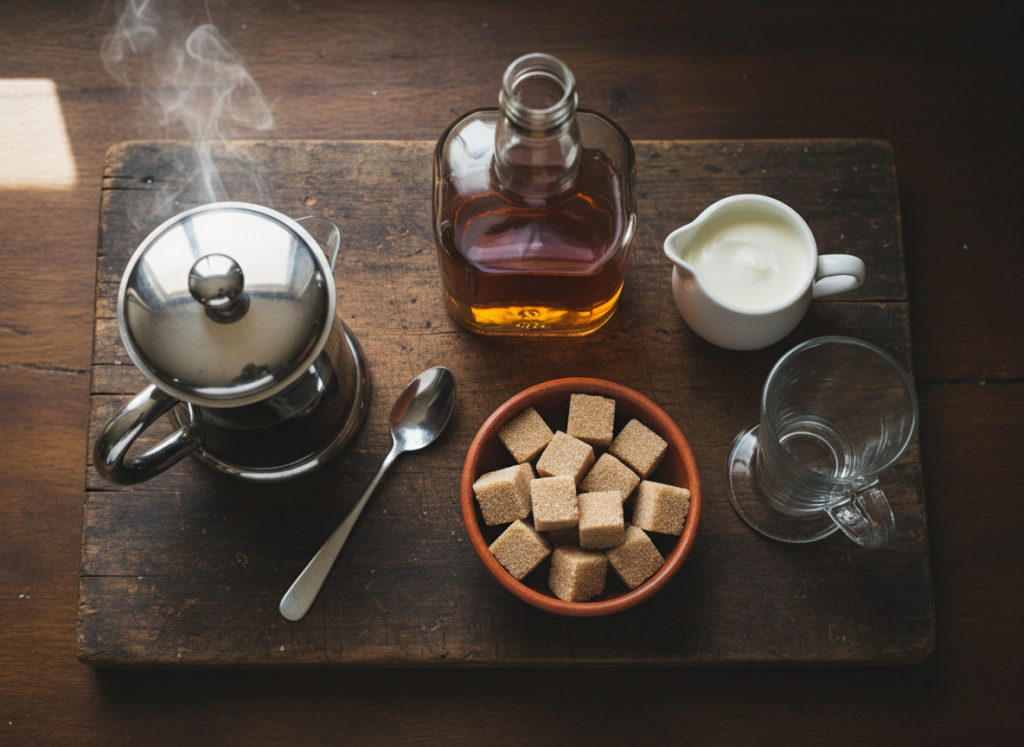
Ingredients (one glass)
- 120ml hot, strong black coffee. A medium or dark roast brewed in a cafetière or filter machine works best. If you only have espresso, top a double shot up with hot water.
- 1–2 teaspoons brown sugar, or two brown sugar cubes. Demerara or light brown soft sugar both work.
- 40ml Irish whiskey. A smooth, blended Irish whiskey is traditional. There’s no need to use anything expensive.
- 30ml double cream, chilled and lightly whipped (more on this below).
Equipment
- A heatproof glass of around 200–250ml. A traditional stemmed Irish coffee glass looks the part, but any heatproof glass mug will do.
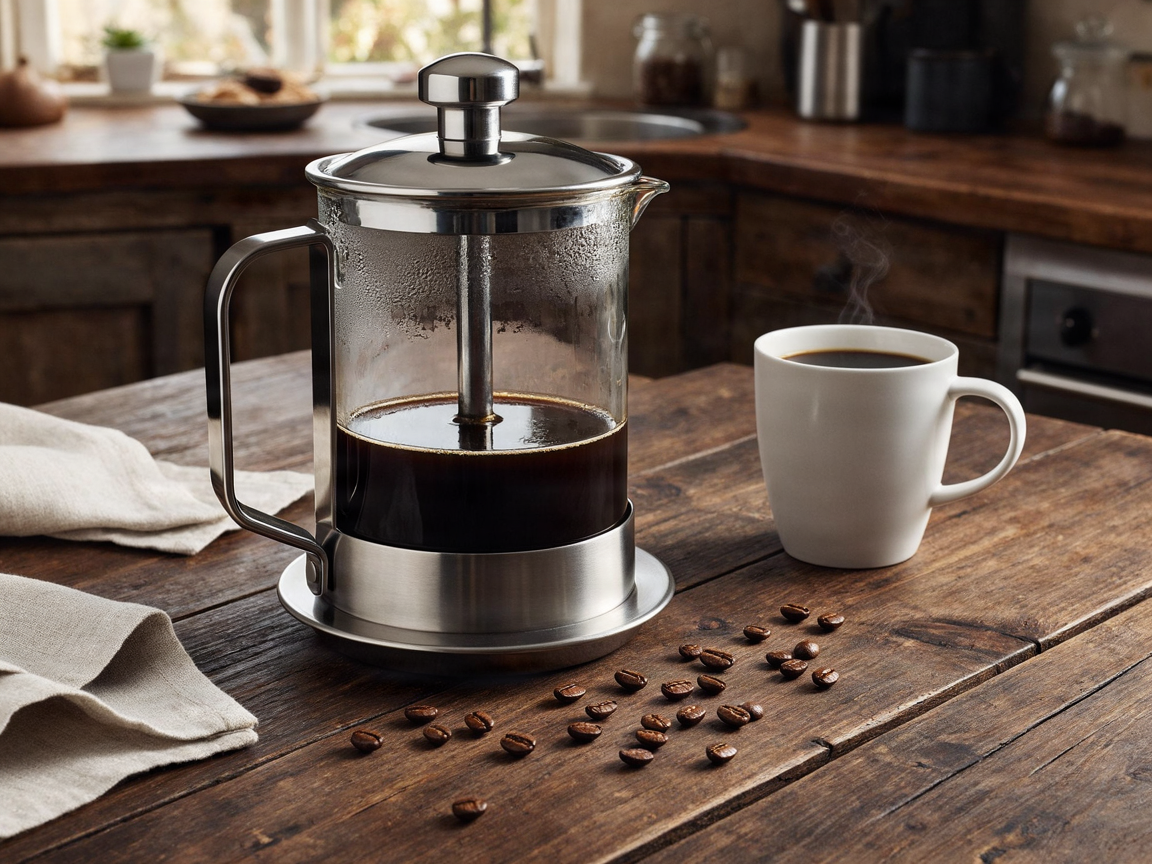
- A way to brew strong coffee, such as a cafetière.
- A teaspoon, plus a small jar with a lid or a handheld frother for whipping the cream.
Step-by-step method
1. Brew the coffee
Brew your coffee a little stronger than usual, because the sugar, whiskey and cream will soften it. Use water just off the boil, at around 93–96°C, to avoid bitterness. Our brewing temperature guide explains why.
2. Warm the glass
Fill the glass with hot water and leave it for a minute, then tip the water away. A warm glass keeps the drink hot for longer and makes cracking less likely.
3. Dissolve the sugar in the coffee
Add the sugar to the warm glass, pour in the hot coffee and stir until the sugar has completely dissolved. Don’t skip the sugar: as well as balancing the flavour, it makes the coffee denser, which helps the cream float.
4. Add the whiskey
Stir in the whiskey. Leave about 1–2cm of space at the top of the glass for the cream.
5. Lightly whip the cream
This is the step that makes or breaks an Irish coffee. You want the cream thickened but still pourable, like melted ice cream, not stiff peaks. Either put cold double cream in a jar with a lid and shake it for 10–20 seconds, or whisk it briefly with a handheld frother. Stop as soon as it starts to thicken.
6. Float the cream
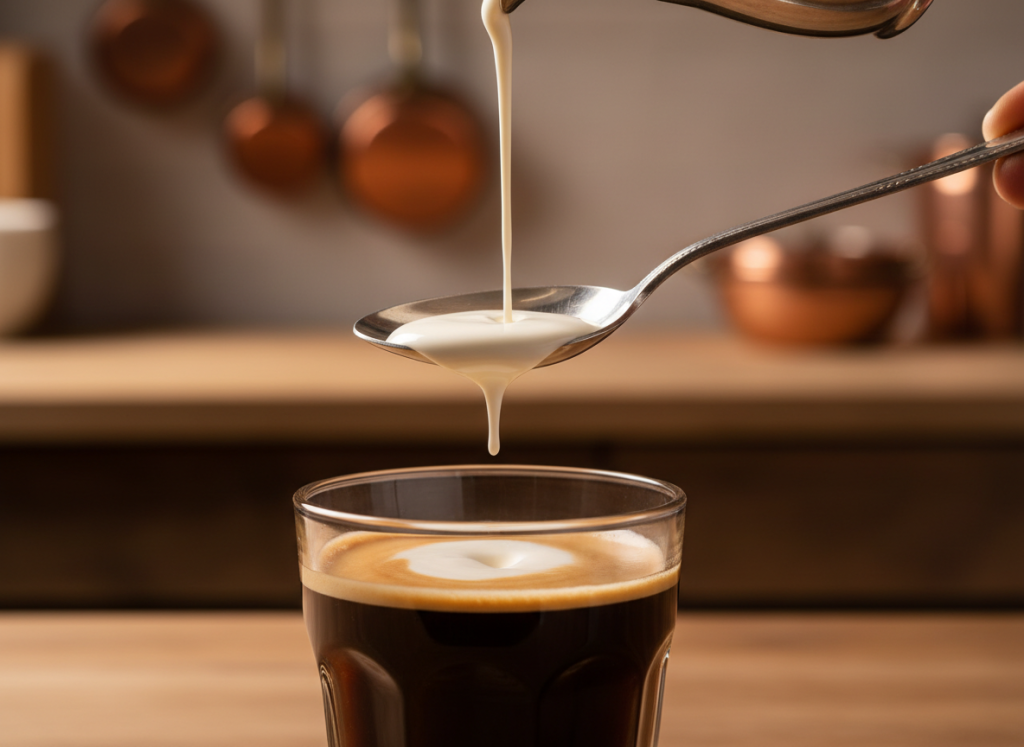
Hold a teaspoon upside down just above the surface of the coffee, touching the inside of the glass, and pour the cream slowly over the back of the spoon. The spoon spreads the cream gently across the top instead of letting it plunge into the coffee. Aim for a layer about 1–2cm thick.
7. Serve straight away, and don’t stir
The joy of an Irish coffee is drinking the hot, sweet coffee through the cool cream, so resist the urge to stir.
Why won’t my cream float?
- It’s not whipped enough. Unwhipped cream is too thin and sinks. Give it a few more seconds’ shaking.
- It’s whipped too much. Stiff cream sits on top in lumps rather than a smooth layer.
- There’s not enough sugar. Sugar makes the coffee denser, so unsweetened coffee is harder to float cream on.
- The wrong cream. Single cream is too thin, and aerosol cream collapses quickly. Use fresh double cream.
- You poured too fast. Pour slowly over the back of the spoon, from just above the surface.
Variations
- Alcohol-free Irish coffee. Leave out the whiskey and add a drop of vanilla extract, or a little caramel syrup, to the coffee. The floating cream works just the same.
- Decaf. Use decaffeinated coffee for an after-dinner drink that won’t keep you awake.
- Cream liqueur coffee. Swap the whiskey for an Irish cream liqueur, and reduce or skip the sugar because the liqueur is already sweet.
- Other spirits. Scotch whisky makes what’s often called a Gaelic or Scottish coffee, and dark rum gives a warming Caribbean twist.
- A festive finish. Dust the cream with a little grated nutmeg or cinnamon.
A little history
The story usually told is that Irish coffee was created in the 1940s by chef Joe Sheridan at Foynes in County Limerick, to warm up cold, weary passengers arriving by flying boat. A travel writer is said to have taken the idea back to San Francisco in the 1950s, where it became a bar classic and was soon enjoyed around the world.
Frequently asked questions
What’s the best coffee for Irish coffee?
A medium or dark roast with chocolatey or nutty notes works well with whiskey and cream. Freshly ground beans make a noticeable difference. See our guide to coffee beans for ideas.
Can I use squirty cream?
You can, but it melts and sinks quickly and doesn’t give the same smooth layer. Lightly whipped double cream is much better.
Can I make it with instant coffee?
Yes. Make it a little stronger than usual. Brewed coffee gives a richer flavour, but instant works if that’s what you have.
How strong is an Irish coffee?
With 40ml of whiskey at 40% ABV, one Irish coffee contains about 1.6 UK units of alcohol. Please enjoy responsibly, and never drink and drive.
Read next: our Brewing Temperature Guide, How to Choose a Coffee Grinder, and our Christmas Gift Guide.
Not sure which to pick? Tell us how you brew and roughly what you’d like to spend, and we’ll point you in the right direction. Ask us a question. We’re happy to help.
Brewing tip: water that’s too hot is the most common cause of bitter tea and coffee. See our brewing temperature guide for the right temperature for every hot drink.
You can also read how buying through The Daily Brew works.
You might also like

Leave a Reply