

Every morning, people around the world drink well over two billion cups of coffee. Whether yours is a quick instant at the kitchen table or a carefully poured flat white, it’s the latest chapter in a story that stretches back more than 500 years, through monasteries, sultans’ courts, London coffeehouses and the plantations of the New World. So put the kettle on, and let’s take a look at how one small red berry conquered the world.
The Legend of Kaldi and the Dancing Goats
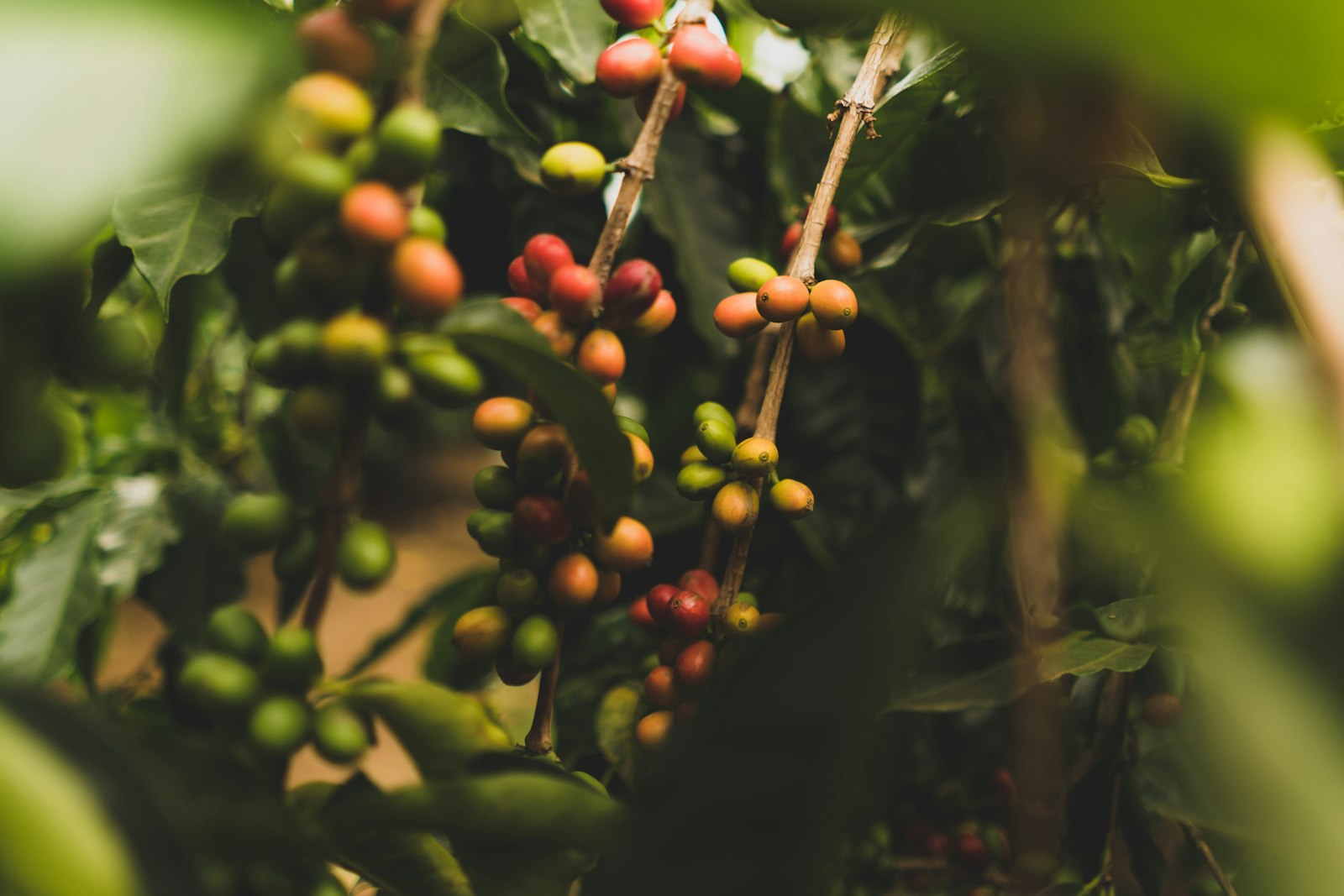
Coffee’s origin story begins in the highlands of Ethiopia, where the Coffea arabica plant still grows wild. According to a much-loved legend, a goatherd named Kaldi noticed his goats becoming unusually lively after nibbling the bright red berries of a certain shrub. Curious, he tried them himself and felt the same burst of energy. He took the berries to a local monastery, where the monks found that a drink made from them kept them alert through long nights of prayer.
It’s a charming tale, but it’s almost certainly just that. The Kaldi story doesn’t appear in writing until 1671, centuries after it supposedly happened. What we do know is that coffee plants are native to Ethiopia, and people there may have chewed the berries or mixed them with fat as an energy-rich snack long before anyone thought to brew them.
Yemen: Where Coffee Became a Drink
The first reliable evidence of coffee drinking comes from across the Red Sea in Yemen, in the mid-1400s. Sufi mystics roasted and brewed the beans to help them stay awake during night-time devotions. Yemen also became the first place to cultivate coffee on a large scale, and its port of Mocha gave its name to one of the most famous coffee styles in the world.
For around two hundred years, Yemen held a near-monopoly on the coffee trade. Beans were often parched or boiled before export so they couldn’t be planted elsewhere, which kept the trade firmly in local hands.
The First Coffeehouses
By the early 1500s, coffee had spread to Mecca, Cairo and beyond. Coffeehouses, known as qahveh khaneh, sprang up across the Middle East. They were lively places to talk, listen to music, play chess and swap news, so lively, in fact, that the authorities grew nervous. In 1511 the governor of Mecca banned coffee, worried that coffeehouses encouraged dissent. The ban didn’t last long, and it wouldn’t be the last time a ruler tried, and failed, to stop people drinking coffee.
In the 1550s, the first coffeehouses opened in Istanbul, the capital of the Ottoman Empire. Coffee became central to Ottoman social life, and the method of brewing finely ground coffee in a small pot, which we now call Turkish coffee, remains popular today.
Coffee Arrives in Europe
Venetian merchants, who traded busily with the Ottoman world, brought coffee to Europe in the late 1500s. At first some people viewed it with suspicion as a foreign “Muslim drink”. A popular story claims that Pope Clement VIII tasted it, enjoyed it, and gave it his blessing. Whether or not that really happened, coffee caught on quickly, and by the mid-1600s coffeehouses were opening across the continent.
Britain’s “Penny Universities”
England’s first coffeehouse opened in Oxford around 1650, and London’s first followed in 1652, run by Pasqua Rosée near Cornhill. Within a few decades London had hundreds of them. They earned the nickname “penny universities” because for the price of a penny you could buy a cup of coffee and join conversations with merchants, writers, scientists and politicians.
Some of Britain’s best-known institutions began life over a cup of coffee. Lloyd’s of London, the famous insurance market, grew out of Edward Lloyd’s coffeehouse in the late 1600s, where ship owners and merchants met to arrange cover for their voyages. Coffeehouses were so influential that in 1675 King Charles II tried to shut them down as hotbeds of political gossip. There was such a public outcry that he backed down within days.
Of course, Britain eventually became a nation of tea drinkers. As the East India Company’s tea trade grew in the 1700s, tea became cheaper and more fashionable, and the coffeehouse slowly faded. Coffee would have to wait until the 20th century for its big British comeback.
Coffee Goes Global
As demand in Europe soared, colonial powers raced to grow their own coffee. In the late 1600s the Dutch began cultivating it on the island of Java in Indonesia, which is why “java” is still slang for coffee. In 1714 the Dutch presented a coffee plant to King Louis XIV of France, and around 1720 a French naval officer named Gabriel de Clieu carried a seedling from that line to the Caribbean island of Martinique. He’s said to have shared his own drinking water with it on the long voyage. Millions of coffee trees in the Americas are thought to descend from that plant.
Coffee reached Brazil in 1727. Legend has it that a Portuguese officer, Francisco de Melo Palheta, charmed the wife of French Guiana’s governor, and she slipped him coffee seeds hidden in a farewell bouquet. By the mid-1800s Brazil had become the world’s largest coffee producer, a title it still holds today.
This expansion has a dark side that’s important to remember. Much of the coffee grown in the Caribbean and the Americas during the 18th and 19th centuries was produced by enslaved people, and the industry’s wealth was built on their forced labour.
America Switches from Tea to Coffee
In North America, coffee got a boost from politics. After the Boston Tea Party in 1773, when colonists protested against British taxes by throwing tea into Boston Harbour, drinking tea came to seem unpatriotic. Coffee took its place, and the United States went on to become one of the world’s biggest coffee-drinking nations.
The Inventions That Changed Your Cup
The last 150 years have transformed how we make coffee at home and on the high street:
- Espresso (1884 onwards): Angelo Moriondo of Turin patented an early steam-driven espresso machine in 1884. In the 1900s Luigi Bezzera and Desiderio Pavoni improved the design, and in the 1940s Achille Gaggia’s lever machine produced the rich crema we associate with espresso today.
- Instant coffee (1900s): Early versions appeared around the turn of the century, but instant coffee really took off when Nescafé launched in 1938. It became a staple for soldiers in the Second World War and later in British kitchens.
- The paper filter (1908): Melitta Bentz, a housewife in Dresden, was tired of bitter, gritty coffee. She punched holes in a brass pot and lined it with blotting paper from her son’s school exercise book, creating the first paper coffee filter.
- Decaf (early 1900s): German merchant Ludwig Roselius developed the first commercial decaffeination process in the early 1900s.
Britain Falls in Love with Coffee Again
In the 1950s, Italian-style espresso bars with gleaming Gaggia machines opened in London’s Soho, becoming hangouts for teenagers, musicians and the new rock ‘n’ roll crowd. From the 1990s onwards, coffee chains spread across the high street, and lattes and cappuccinos became an everyday treat.
Today we’re in what’s often called the “third wave” of coffee, where the focus is on quality, origin and craft. Independent roasters, single-origin beans and home brewing methods like the pour-over, AeroPress and French press have made it easier than ever to make café-quality coffee in your own kitchen.
A Story Still Being Brewed
From a legendary goatherd on an Ethiopian hillside to the cup in your hand, coffee has fuelled prayers, revolutions, businesses and countless conversations. It has been banned, blessed, smuggled and celebrated, and it’s still evolving today.
Here at The Daily Brew, we’ll be exploring the best coffee and tea, the gadgets that help you brew them, and the stories behind your favourite cup. What’s your go-to morning brew? Let us know in the comments below.
You might also like



Leave a Reply