

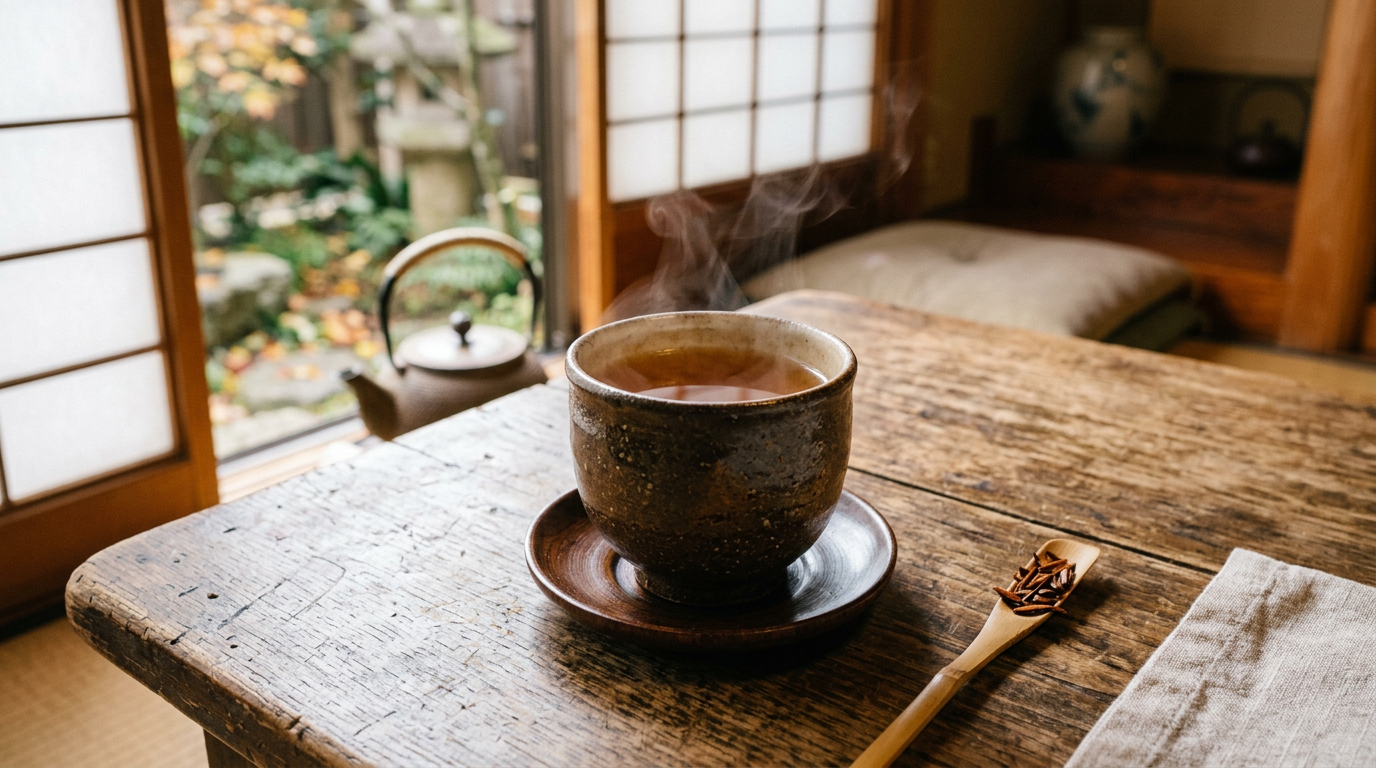
If you like the idea of green tea but find it too grassy or bitter, hōjicha (say “ho-ji-cha”) might be the tea for you. It’s a Japanese green tea that has been roasted until the leaves turn a warm reddish-brown, giving it a toasty, nutty flavour that’s closer to a gentle roasted coffee or cocoa than to a typical green tea.
It’s also low in caffeine, very forgiving to brew and lovely with milk, which is why hōjicha lattes have started appearing on café menus. This guide covers what it is, how it compares with other Japanese teas, and how to make it at home.
What is hōjicha?
Hōjicha means “roasted tea” in Japanese. It starts life as an ordinary Japanese green tea, made from the same Camellia sinensis plant as all other tea. The leaves, and often the stems, are then roasted at a high temperature, traditionally in a porcelain pot over charcoal. The roasting changes the colour from green to brown and transforms the flavour.
It’s thought to have been first made in Kyoto in the 1920s, when tea merchants began roasting leftover leaves and stems to make use of them. Today it’s an everyday tea in Japan, often served with meals and given to children and older people because it’s so mild.
Most hōjicha is made from bancha (a later-harvest green tea) or kukicha (a tea made mostly from stems and twigs). Some premium versions are made from sencha, Japan’s most popular green tea.
What does it taste like?
Hōjicha is smooth, mellow and comforting. Expect notes of toasted nuts, caramel, cocoa and a hint of smoke, with almost none of the bitterness or sharpness that green tea can have. The roasty aroma comes from compounds called pyrazines, which form during roasting, the same family of compounds that gives coffee and toasted bread their smell.
Lightly roasted hōjicha is golden and delicate. Deeply roasted hōjicha is darker, richer and more like a roasted grain drink.
Hōjicha, sencha and matcha compared
| Hōjicha | Sencha | Matcha | |
|---|---|---|---|
| What it is | Roasted green tea leaves and stems | Steamed green tea leaves | Shade-grown green tea, ground into powder |
| Colour in the cup | Amber to reddish-brown | Pale yellow-green | Vivid, opaque green |
| Taste | Toasty, nutty, caramel, smooth | Fresh, grassy, slightly bitter | Rich, creamy, savoury |
| Caffeine | Low | Medium | Higher |
| Water temperature | 90–100°C | 70–80°C | 75–80°C |
| Best time to drink | Any time, including evenings | Morning or afternoon | Morning or early afternoon |
| Good with milk? | Yes, very | Not usually | Yes, as a latte |
For more on matcha and everyday green tea, see our guide to Matcha vs Green Tea.
Caffeine: a good evening tea
Hōjicha is one of the lowest-caffeine teas made from the tea plant. That’s mainly because it’s usually made from later-harvest leaves and stems, which naturally contain less caffeine than young spring leaves, and roasting may reduce it a little further. A cup typically has noticeably less caffeine than a cup of sencha, and far less than matcha or coffee.
That makes it a popular choice for the afternoon or after dinner. It isn’t caffeine-free, though, so if you’re very sensitive to caffeine, or pregnant and keeping an eye on your intake, count it in your daily total.
Is hōjicha good for you?
Like all tea, hōjicha is a calorie-free drink when taken without milk or sugar, and it contains antioxidants. Roasting breaks down some of the catechins (the antioxidants green tea is best known for), so hōjicha has fewer of them than an unroasted green tea. On the other hand, roasting also removes much of the bitterness, and many people find hōjicha gentler on the stomach than regular green tea or coffee.
The honest summary: drink hōjicha because you enjoy it and want a low-caffeine cup, rather than for any special health benefit.
Loose leaf, tea bags or powder?
- Loose leaf has the most aroma and flavour, and is easy to brew in a teapot or infuser. You’ll often see a mix of brown leaves and pale twigs, which is normal.
- Tea bags are the most convenient and still taste good, as hōjicha is very hard to over-brew.
- Hōjicha powder is finely ground roasted tea, used like matcha. It’s the one to buy for lattes and baking.
How to brew hōjicha
Unlike most green teas, hōjicha likes hot water. Because the leaves have already been roasted, near-boiling water brings out its toasty flavour without making it bitter. Our Brewing Temperature Guide has more on getting the water right.
Hot hōjicha (loose leaf)
- Use about 2 heaped teaspoons (3–4g) of leaves for a 250ml mug. Hōjicha leaves are light and bulky, so use more by volume than you would for other teas.
- Pour over water at 90–100°C. Just off the boil is fine.
- Steep for 30 seconds to 1 minute in a small Japanese-style teapot, or 2–3 minutes in a mug with an infuser.
- Strain and enjoy. Good leaves can be steeped two or three more times, adding a little more time for each.
Hōjicha latte
- Sift 1–2 teaspoons of hōjicha powder into a mug.
- Add a splash (about 30–50ml) of hot water and whisk into a smooth paste with a bamboo whisk or a handheld milk frother.
- Top up with about 200ml of steamed or frothed milk. Oat milk works especially well with the nutty flavour.
- Sweeten with a little honey or maple syrup if you like.
No powder? Steep a double-strength cup of loose-leaf hōjicha (about 4g in 100ml of water for 3 minutes), strain, and top up with hot milk.
Iced or cold brew hōjicha
Add about 10g of leaves to a litre of cold water, cover and leave in the fridge for 6–8 hours or overnight, then strain. Cold brewing gives a sweet, smooth, almost chocolatey tea that’s lovely in summer.
What to eat with it
Hōjicha’s toasty flavour makes it a good partner for food. In Japan it’s often served with meals because it doesn’t overpower what you’re eating. It also goes well with chocolate, biscuits, caramel desserts and anything with nuts. Hōjicha powder is a popular baking ingredient too, in cakes, cookies and ice cream.
Storing hōjicha
Keep hōjicha in an airtight tin, away from light, heat and strong smells. The roasted aroma is what makes it special, and it fades over time, so try to use it within two to three months of opening. Powder loses its flavour faster than leaves.
Tip: make your own at home
If you have some green tea that’s past its best, you can roast it yourself. Heat a dry frying pan over a medium heat, add a few spoonfuls of green tea leaves and keep them moving for a few minutes until they turn brown and smell toasty. Let them cool, then brew as above. It won’t match a carefully roasted hōjicha, but it’s a fun way to taste the difference roasting makes.
Is hōjicha for you?
- Yes, if you find green tea too grassy or bitter, want a low-caffeine tea for the evening, or like the idea of a nutty, comforting latte.
- Perhaps not, if you love the fresh, vegetal taste of green tea or want the strongest antioxidant content. Sencha or matcha would suit you better.
Because it’s so forgiving to brew, hōjicha is one of the easiest Japanese teas to get right first time, which makes it a great place to start if you’re new to them.
You might also like

Leave a Reply